Great Military Stories

Maj Charles Liteky, U.S. Army (1966-1971)

Maj Charles Liteky, U.S. Army (1966-1971)

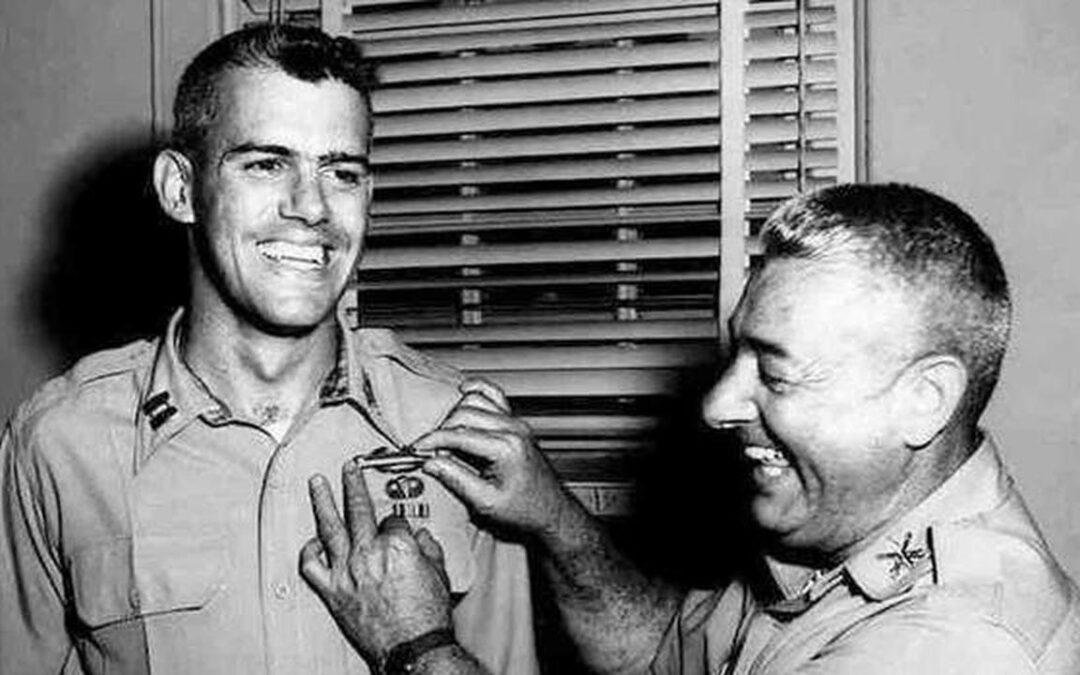
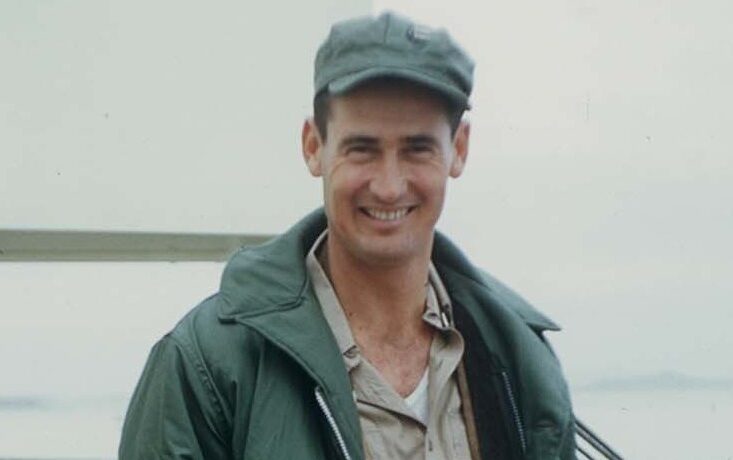
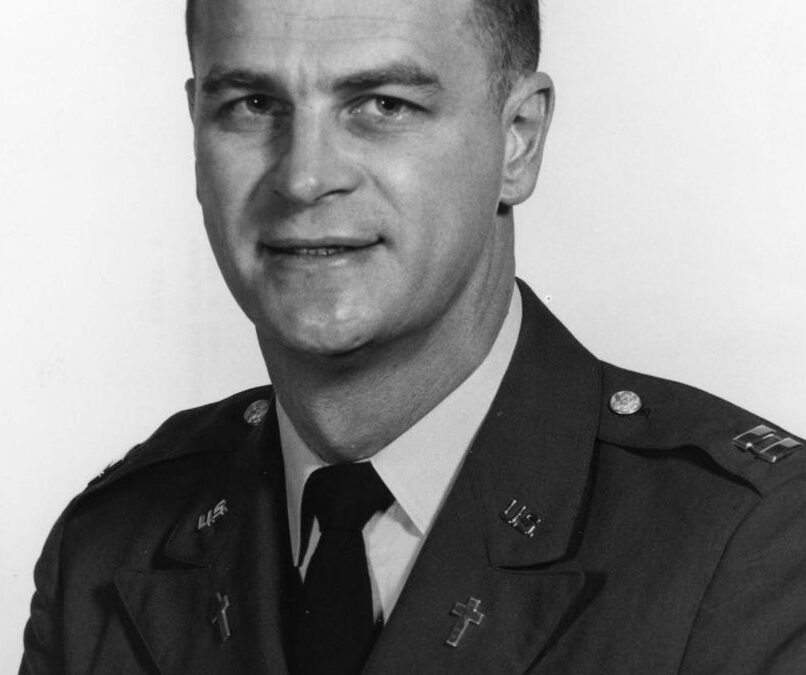
Charles Joseph Liteky, a former Army chaplain, Vietnam War Medal of Honor recipient and peace activist, died of a stroke at the San Francisco Veterans Administration Hospital on Jan. 20, 2017. He was 85-years-old. At The Beginning of Charles Liteky Military Service Charles Liteky was born in Washington, D.C. on Feb. 14, 1931, the son of a crusty career sailor who served 33 years in the Navy, leading to frequent moves as he was growing up. In 1948 when his father was stationed at Jacksonville Naval Air Station, the darkly handsome, 6-foot-1, 160-pound senior was the charismatic quarterback on the Robert E. Lee High School's football team and was known to have broken a whole lot of girls' hearts. Following his graduation from high school, he attended Chipola Junior College and the University of Florida before transferring to an Alabama seminary affiliated with the Missionary Servants of the Most Holy Trinity. Now known as Trinity Mission, the group is a Catholic congregation...

read more
PFC Shizuya Hayashi, U.S. Army (1942 – 1945)

PFC Shizuya Hayashi, U.S. Army (1942 – 1945)

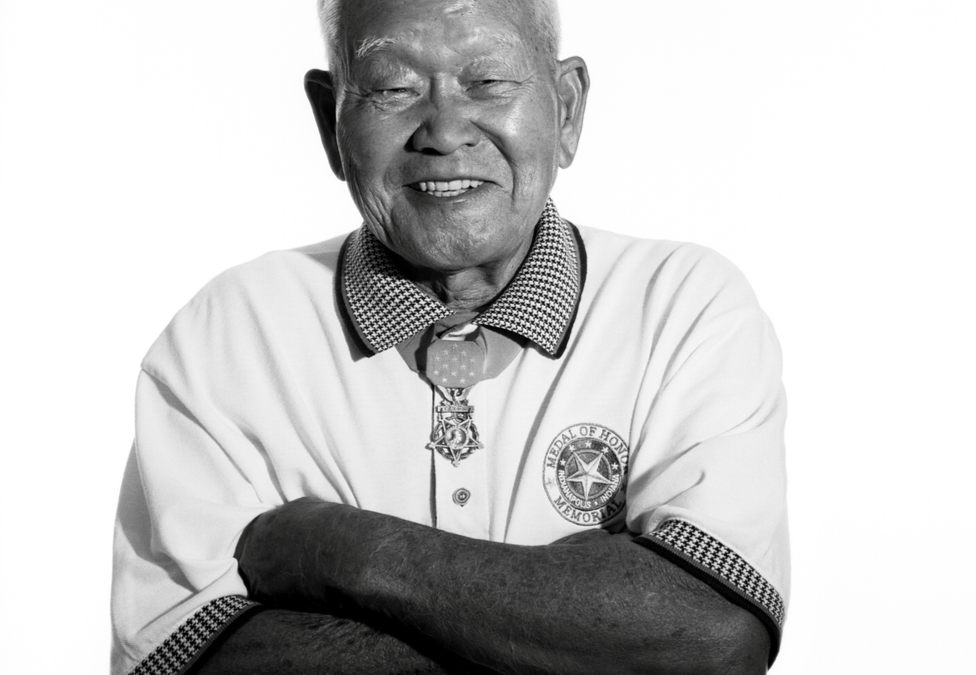
During the Italian Campaign of World War II, German troops were faced with a sight they had never expected: Japanese-American soldiers. These troops were members of the 100th Infantry Battalion, which was comprised entirely of Nisei (children of Japanese Immigrants) troops. What makes this story all the more amazing is knowing how these troops, and their families, had been treated by a scared and hateful populace at home. Their families, friends, and neighbors were being imprisoned by the American government, over suspicions of seditious or treasonous behavior. But the men of the 100th were proud patriots and wanted to prove to the American populace that one's heritage doesn't dictate one's nationality. The Battalion fought bravely through the Italian campaign and earned the respect both of their peers and their enemies. But when this unit made the first contact with the enemy, one man showed his courage above the rest. Shizuya Hayashi was born in Hawaii, on November 28, 1917. The...

read more
Women Of The Vietnam War

Women Of The Vietnam War

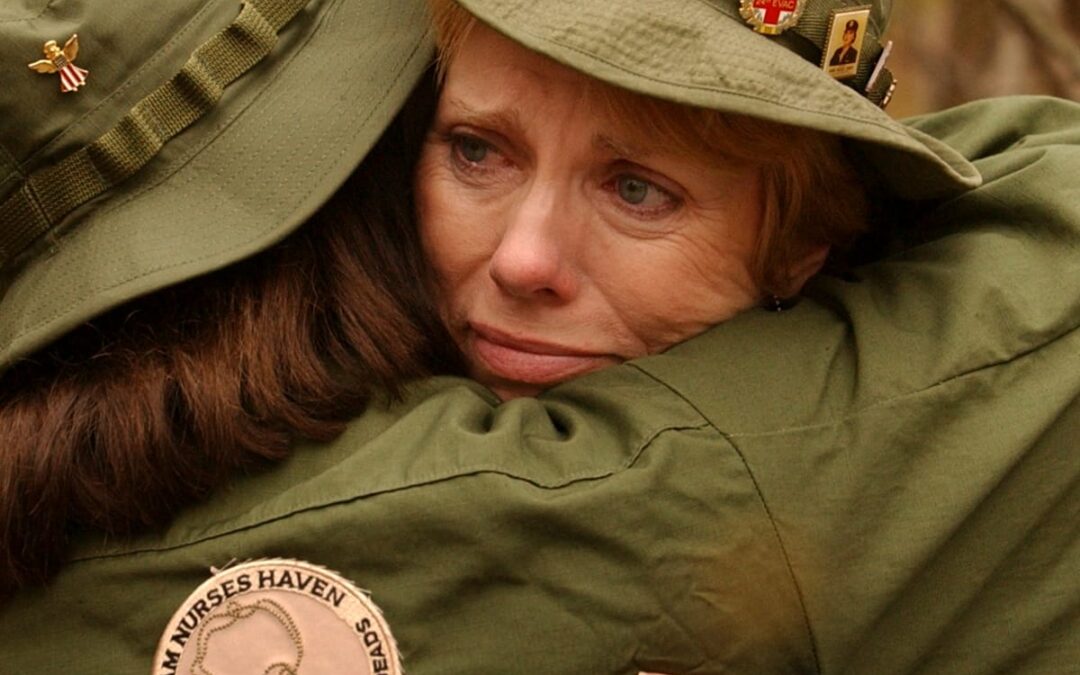
It has been estimated that as many as 11,000 women served in Vietnam or in other locations, but over 90% served as nurses. Women Of The Vietnam War served as nurses in evacuation hospitals, MASH units and aboard hospital ships. Others worked in support roles in military information offices, headquarters, service clubs, and various other clerical, medical, and personnel positions. Servicewomen in Vietnam experienced many of the same hardships as their male counterparts and served bravely in dangerous situations. Many were awarded personal citations.  Non-military women also served important roles. They provided entertainment and support to the troops through the USO, the American Red Cross, and other humanitarian organizations. Women working as civilian nurses for USAID (US Agency for International Development) participated in one of the most famous humanitarian operations of the war, Operation Babylift, which brought thousands of Vietnamese orphans to the U.S. for...

read more
Vietnam War – Battle of Ngok Tavak & Kham Duc

Vietnam War – Battle of Ngok Tavak & Kham Duc

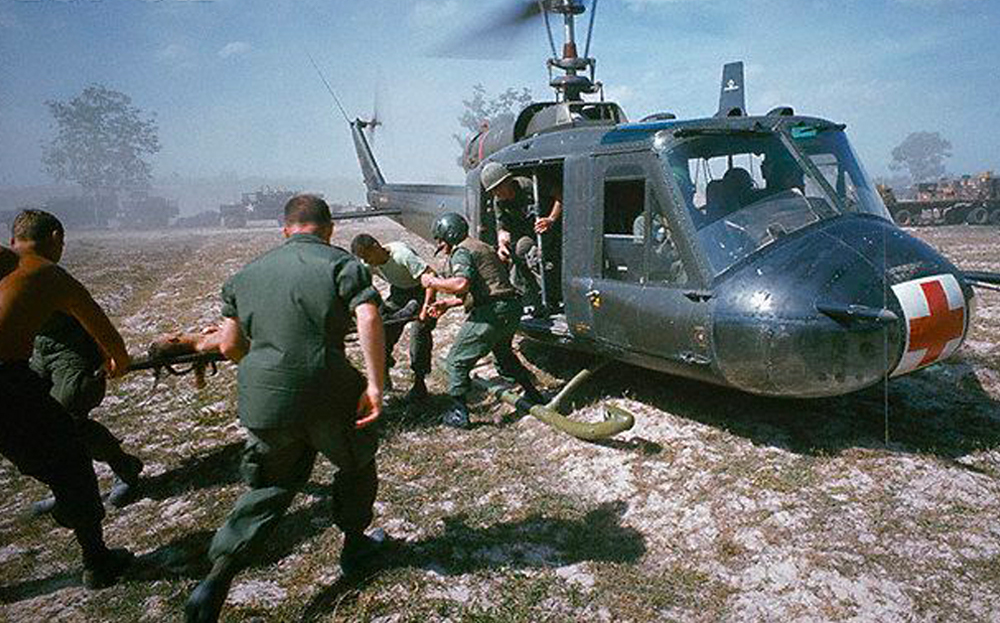
Kham Duc Special Forces Camp (A-105), was located on the western fringes of Quang Tin Province, South Vietnam. In the spring of 1968, it was the only remaining border camp in Military Region I. Backup responsibility for the camp fell on the 23rd Infantry Division (Americal), based at Chu Lai on the far side of the province. The camp had originally been built for President Diem, who enjoyed hunting in the area. The 1st Special Forces Detachment (A-727B) arrived in September 1963 and found the outpost to be an ideal border surveillance site with an existing airfield. The camp was located on a narrow grassy plain surrounded by rugged, virtually uninhabited jungle. The only village in the area, located across the airstrip, was occupied by post dependents, camp followers, and merchants. The camp and airstrip were bordered by the Ngok Peng Bum ridge to the west and Ngok Pe Xar mountain, looming over Kham Duc to the east. Steeply banked streams full of rapids and waterfalls cut through the...

read more
WW1 – Meuse-Argonne Offensive

WW1 – Meuse-Argonne Offensive

World War I will be remembered as one of the bloodiest wars in human history. Millions of soldiers died on both sides, and whole generations of young men were wiped out. Armies were bogged down in impenetrable trenches, resulting in thousands dying in futile assaults against fortified enemies. The war also introduced new and terrible weapons, such as the machine gun, which made the war even more horrific and bloody. There were many terrible battles, but the worst one for the American Expeditionary Forces (AEF) was the Meuse-Argonne Offensive. On August 30, 1918, the supreme commander of Allied forces, Marshal Ferdinand Foch, arrived at the headquarters of General John J. Pershing's 1st US Army. Foch ordered Pershing to effectively shelve a planned offensive against the St. Mihiel salient as he wished to use the American troops piecemeal to support a British offensive to the north. Outraged, Pershing refused to let his command be broken apart and argued in favor of moving forward with...

read more
Bayonet Charge

Bayonet Charge

Following World War I, Americans reached the conclusion that our country's participation in that war had been a disastrous mistake, one which should never be repeated again. This resulted in a major segment of the population becoming "isolationist" hoping to avoid dragging the country into another disastrous foreign war. Lewis Lee Millett Enlisted Into the National Guard While Still in High School Even when Nazi German invaded Poland in 1939 and began conquering and controlling much of continental Europe, most Americans were adamant we stay out of the war - even though the war in Europe posed a serious challenge to the U.S. neutrality. Americans eager to help fight fascism and Hitler grew frustrated. A large number of these were young American males. Romanticized by the idea of fighting in battle and not wanting to wait until the United States decided to enter the war, many crossed the border into Canada. Among them was a South Dartmouth, MA. teenager by the name of Lewis Lee...

read more
Parallel Lives, Shared History

Parallel Lives, Shared History

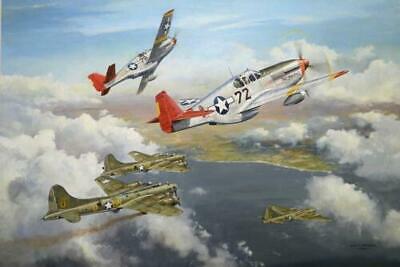
Herb Heilbrun and John Leahr were twenty-one when the United States entered WWII. Herb became an Army Air Forces B-17 bomber pilot. John flew P-51 fighters. Both were thrown into the brutal high-altitude bomber war against Nazi Germany. However, they never met because the Army was rigidly segregated - only in the air were black and white American fliers allowed to mix. Both came safely home, but it took a chance meeting 20 years ago when the two retired salesmen met at a reunion of the Tuskegee Airmen in Cincinnati. That meeting led them to review their parallel lives and discover their shared history. It began in 1995 when Herb read in the newspaper that the city was honoring the local chapter of the Tuskegee Airmen, the all-black 332nd Fighter Group. They flew "Red-Tail" P-51s on missions escorting bomber squadrons from Italy into Germany and German-held territories. Herb could still remember hearing, amid the radio chatter over the target, the distinctive voices of the...

read more
Veteran of Three Wars Under Three Flags

Veteran of Three Wars Under Three Flags

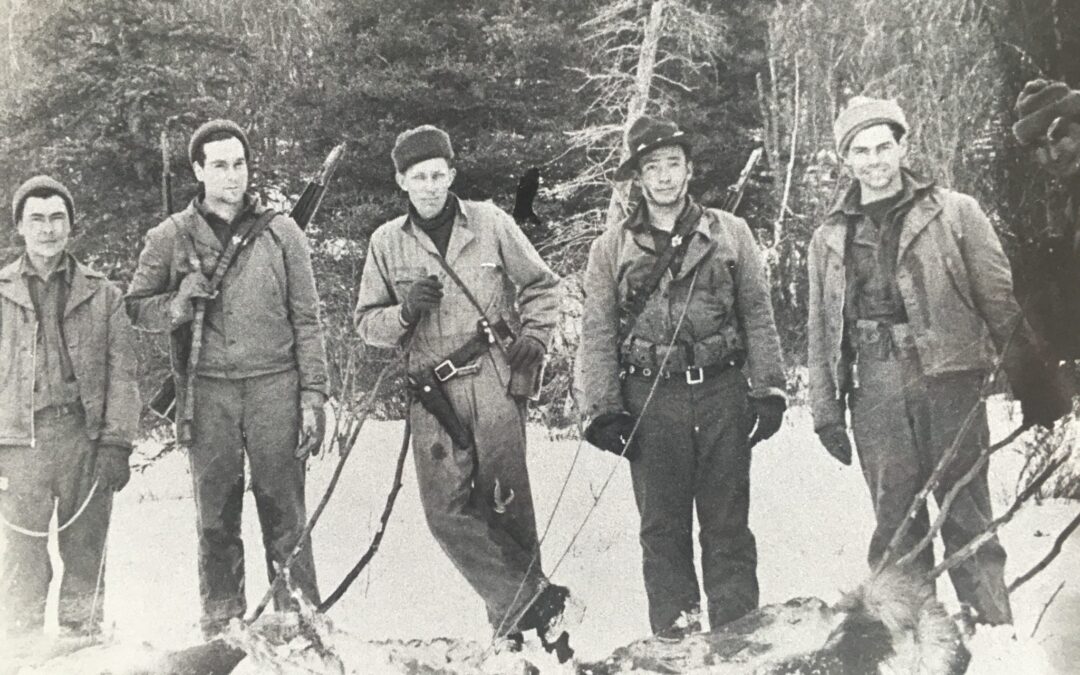
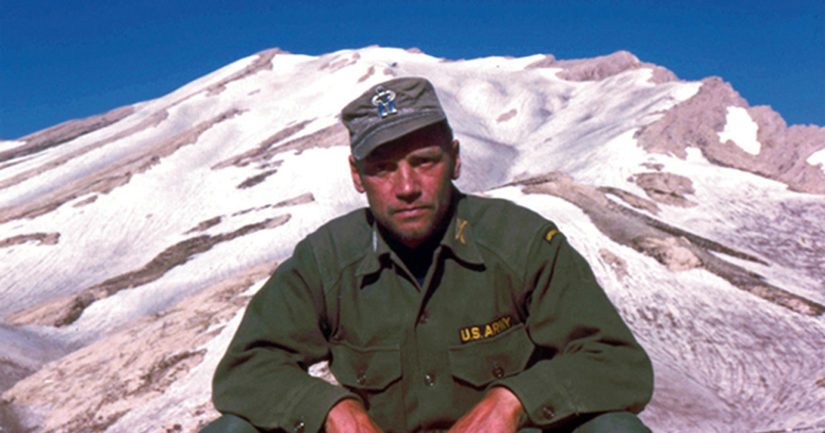
Lauri Allan Torni, later known as Larry Thorne, spent the majority of his life-fighting communists. First, the Soviets while in the service of Finland and Germany during World War II and then the Vietcong and North Vietnamese as a U.S. Army Special Forces officer during the Vietnam War. Biography Veteran of Three Wars Larry Thorne Lauri Torni was born in Finland, the son of a sea captain, in 1919. He enlisted in the Finnish Army at the age of 18 and was near the completion of his enlistment when the Soviet Union attacked Finland in late 1939. With his service suddenly extended as part of Finland's mass mobilization of troops, Torni was transferred to the front line, where he began a reputation as a determined fighter and strong leader. His heroism fighting the Red Army in what became known as the Winter War quickly caught the attention of his commanders resulting in commissioning as an officer. The Winter War ended with the Moscow Peace Treaty in March 1940. In 1941, when Hitler...

read more
Vietnam War – Operation Crazy Horse (1966)

Vietnam War – Operation Crazy Horse (1966)

On May 20, 1966, close to dusk and in a light rain, B Company, 1st Battalion, 8th Cavalry (ABN/AMB), 1st Brigade, 1st Cavalry Division, commanded by Capt. Roy D. Martin was airlifted by Chinook helicopters (CH-47s) into a small clearing located in the mountains east of the Vinh Thanh Valley, Republic of Vietnam. The clearing had been designated LZ Horse and could accommodate only one CH-47 at a time.  The company had been ordered to the LZ to begin operations in search of a large NVA/VC force that had been heavily engaged with other units of the 1st Brigade since May 16th. Specifically, B Company along with C Company 1/8th were to link up on the morning of the 21st and generally proceed along a trail and streambed to the northeast of LZ Horse to engage and defeat an enemy force suspected of being in the area. Capt. William Mozey had arrived earlier that afternoon and had been committed in support of another unit who was heavily engaged to the north of LZ Horse. C Company had...

read more
WW2 – Behind Enemy Lines – The 82nd and 101st Airborne on D-Day (1944)

WW2 – Behind Enemy Lines – The 82nd and 101st Airborne on D-Day (1944)

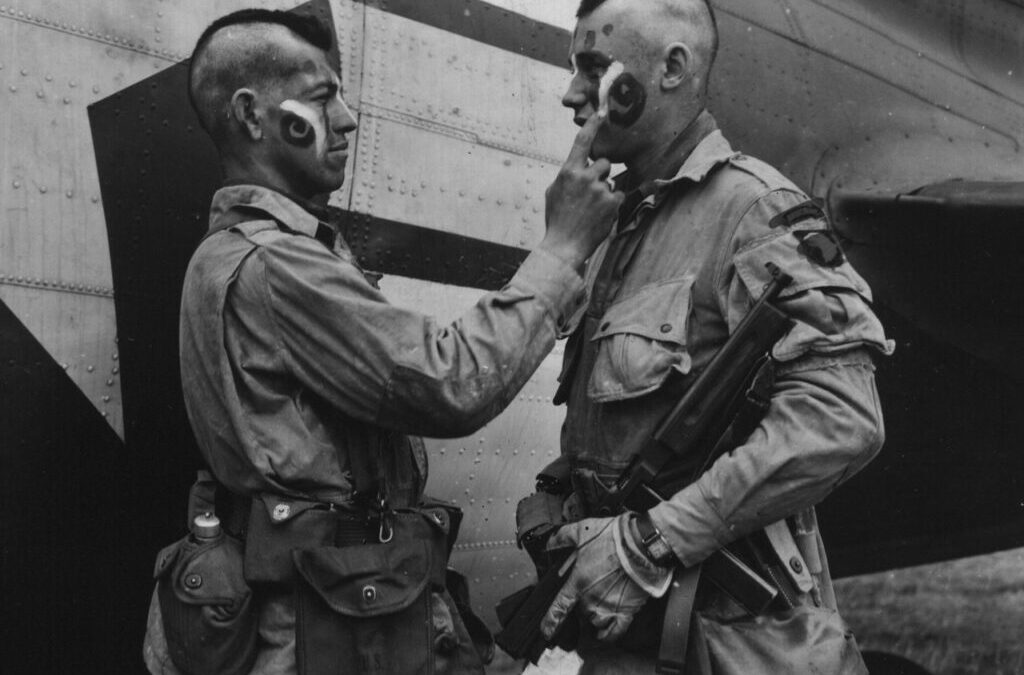
The amphibious landings of D-Day were hours away when the first combat missions by the US Army started in France. The invasion of Normandy began with a large-scale parachute drop that included 13,100 Soldiers of the 82nd and the 101st Airborne Divisions. The attack occurred during the night in the early hours of June 6th, 1944, and was the vanguard of the Allied operations in Normandy. D-Day Airborne Assault: Planning and Preparation The troops were all part of the US VII Corps assigned to capture Cherbourg, the coastal city in Normandy, that would serve as a supply port for the Allied troops after the landing. They were also tasked with a specific mission: to block approaches into the vicinity of the amphibious landing at Utah Beach, to capture causeway exits off the beaches, and to establish crossings over the Douve River at Carentan to assist the US V Corps in joining up the two American beachheads. Once the paratroopers landed, all hell broke loose. The heavy fighting marked the...

read more
MA2 Doris Miller, U.S. Navy (1939–1943) – Navy Named Aircraft Carrier for Pearl Harbor Hero

MA2 Doris Miller, U.S. Navy (1939–1943) – Navy Named Aircraft Carrier for Pearl Harbor Hero

On Martin Luther King Jr. Day, January 20th, 2020, at Pearl Harbor, the Navy announced that a $12.5 billion aircraft carrier will be named after Mess Attendant 2nd Class Doris Miller, the first African American to receive the Navy Cross for valor for his actions on December 7, 1941, when he manned a machine gun on the USS West Virginia to fire back at attacking Japanese planes. "I think that Doris Miller is an American hero simply because of what he represents as a young man going beyond the call of what's expected," said Doreen Ravenscroft, president of Cultural Arts of Waco (Texas) and team leader for the Doris Miller Memorial. Doris Miller Was The First African American Who Earn The Navy Cross In 1941 an African American was not allowed to man a gun in the Navy, and as far as rank was concerned, "he could not really get above a Messman level," Ravenscroft said. Miller's actions started to turn the tide, she added. "Without him really knowing, he actually was a part of the civil...

read more
MajGen Smedley Butler, U.S. Marine Corps (1898–1931) – Medal of Honor Recipient

MajGen Smedley Butler, U.S. Marine Corps (1898–1931) – Medal of Honor Recipient

Smedley Butler may be the best-known double Medal of Honor recipient and one of the most popular military Generals in U.S. history. Butler served 33 years in the Marine Corps and had a role in the Spanish-American War in Cuba, the Philippine-American War in Manila, the Boxer Rebellion in China, the Banana Wars in the Caribbean, the Mexican Revolution, and World War I. Butler's first Medal of Honor was earned during the Mexican Revolution when the then-major fought block to block in the streets of Vera Cruz to rid the city of the. resistance. His second award occurred a year later in 1915 when his Marines engaged in hand-to-hand combat with the Caicos resistance, a lower society of miscreants who formed a gang to wreak havoc in Haiti. Smedley Butler is One of the Most Revered Military Generals in U.S. History His wartime heroics became legendary, and he is one of the most recognized Marines of all time. Butler also introduced the Marine Corps' first unofficial mascot, a bulldog named...

read more