

“Courage is doing what you’re afraid to do.
There can be no courage unless you’re scared.”
Eddie Rickenbacker, Major, USAAS
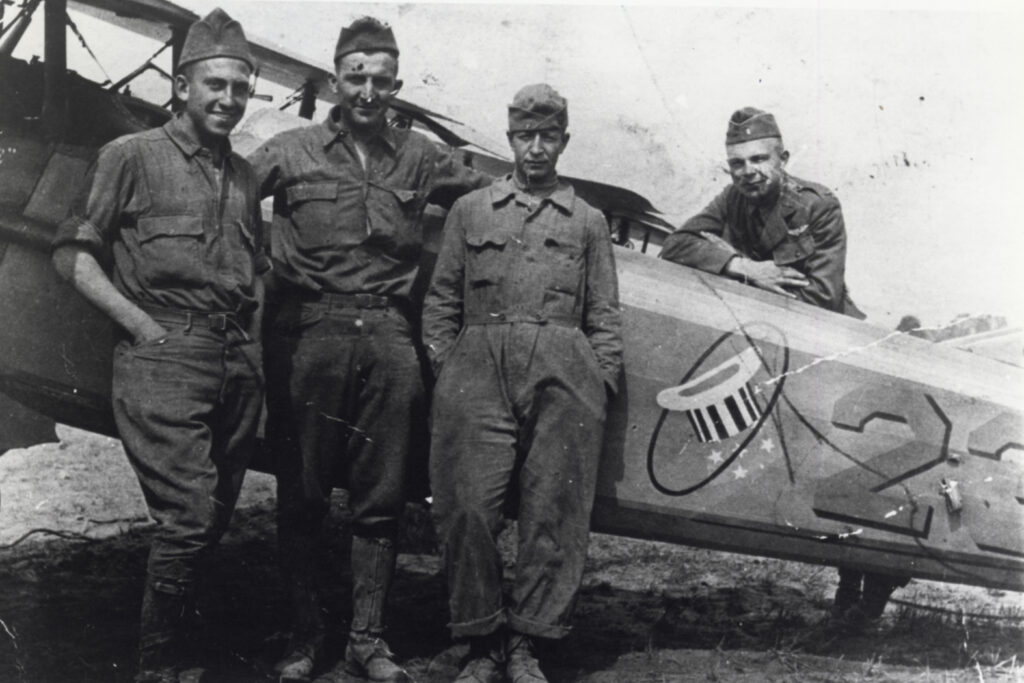
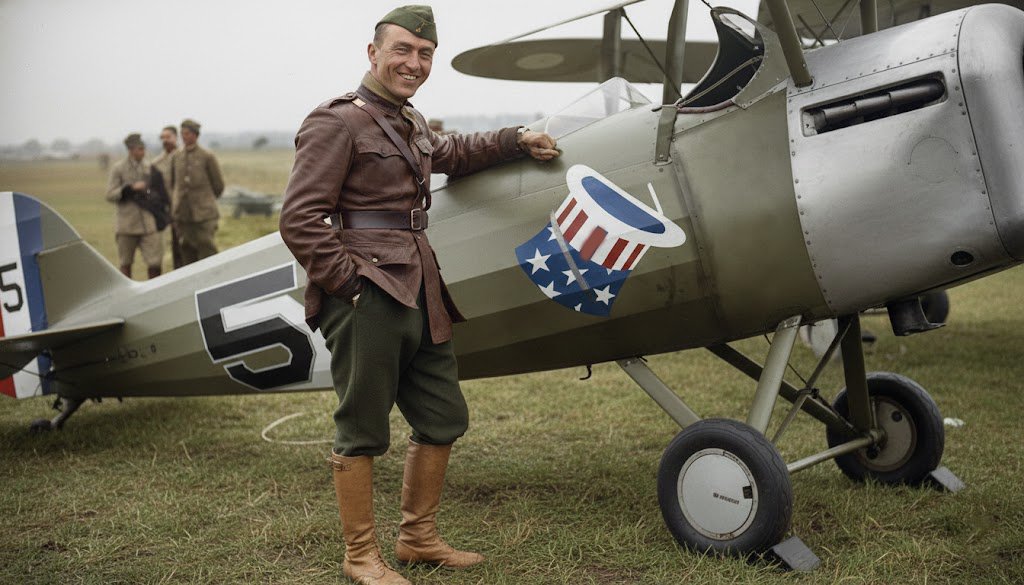
The 94th Fighter Squadron is a unit of the United States Air Force 1st Operations Group located at Joint Base Langley-Eustis, Virginia. The 94th’s primary weapon system is the F-22 Raptor at this time. Throughout its full course and its precursor units, the 94th has been assigned to 70 different stations worldwide, and since its inception, has flown 43 different airframes. The 94th was officially the first American squadron representing American air forces to arrive on the WWI Western Front. The emblem design was adopted because it was symbolic of Uncle Sam throwing his hat into the ring—the Squadron insignia, Hat-in-the-Ring, suggested by Capt. Paul M. Walters, Med. Corps Surgeon was adopted, and Lieutenant Wentworth was assigned the task of drawing the proposed insignia. The squadron was previously using the 103’s emblem. Just prior to the group’s deployment overseas in 1942, former 94th Aero Squadron Ace, Capt Eddie Rickenbacker successfully lobbied for reinstatement of the ‘Hat In The Ring’ symbol as the official Group insignia of the 94th Fighter Squadron.
The 94th Fighter Squadron Is Born in World War I
The 94th FS is one of the oldest units in the United States Air Force, first being organized on 20 Aug 1917 as the 94th Aero Squadron of the United States Army Air Service at Kelly Field, Texas. The squadron deployed to France and fought on the Western Front during World War I as a pursuit squadron. It took part in the Champagne-Marne defensive; Aisne-Marne offensive; St. Mihiel offensive, and Meuse-Argonne offensive.
In 1924, it was consolidated with the 103d Aero Squadron (Pursuit). The 103d was largely composed of former members of the French Air Service Lafayette Escadrille (from the French Escadrille de Lafayette). This was a squadron of American volunteer pilots who had joined the French Air Service prior to the United States’ entry into the war on 6 Apr 1917. In July 1926, with the disestablishment of the U.S. Army Air Service, the squadron became part of the U.S. Army Air Corps (USAAC).
The 94th Fighter Squadron Builds Its Combat Reputation
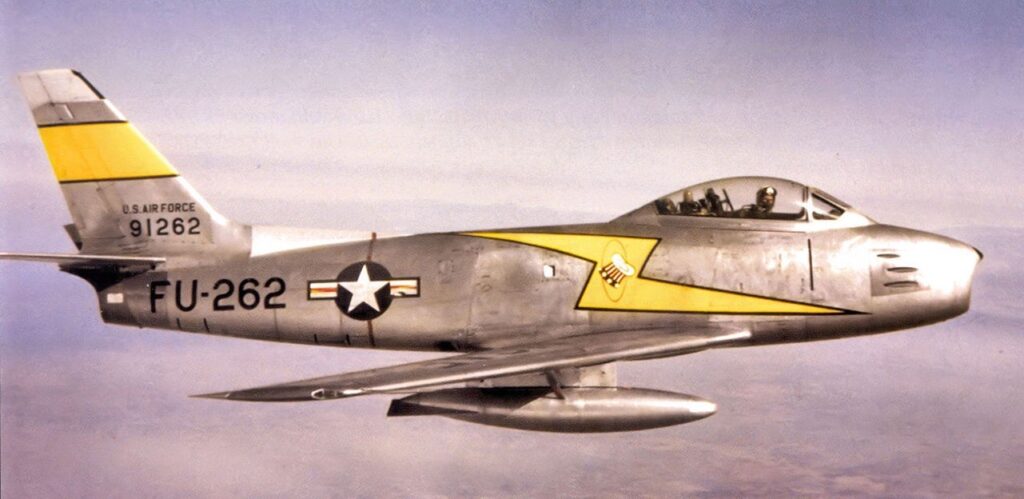
In June 1941, the squadron became part of the renamed U.S. Army Air Forces (USAAF). During World War II the unit served in the Mediterranean Theater of Operations (MTO) as part of Twelfth Air Force as a P-38 Lightning fighter squadron, participating in the North African and Italian campaigns. In September 1947, it became part of the newly established United States Air Force (USAF). During the Cold War it was both an Air Defense Command (ADC) fighter-interceptor squadron, and later as part of Tactical Air Command (TAC). It was one of the first USAF operational squadrons equipped with the F-15A Eagle in January 1976. With the disestablishment of TAC in 1992, it was assigned to the newly established Air Combat Command (ACC).

The 94th Fighter Squadron provides air superiority for the United States and allied forces by engaging and destroying enemy forces, equipment, defenses or installations for global deployment as part of the 1st Fighter Wing. Air Force TWS currently lists one-hundred and twenty-one members who have served with this iteration of the 94th.
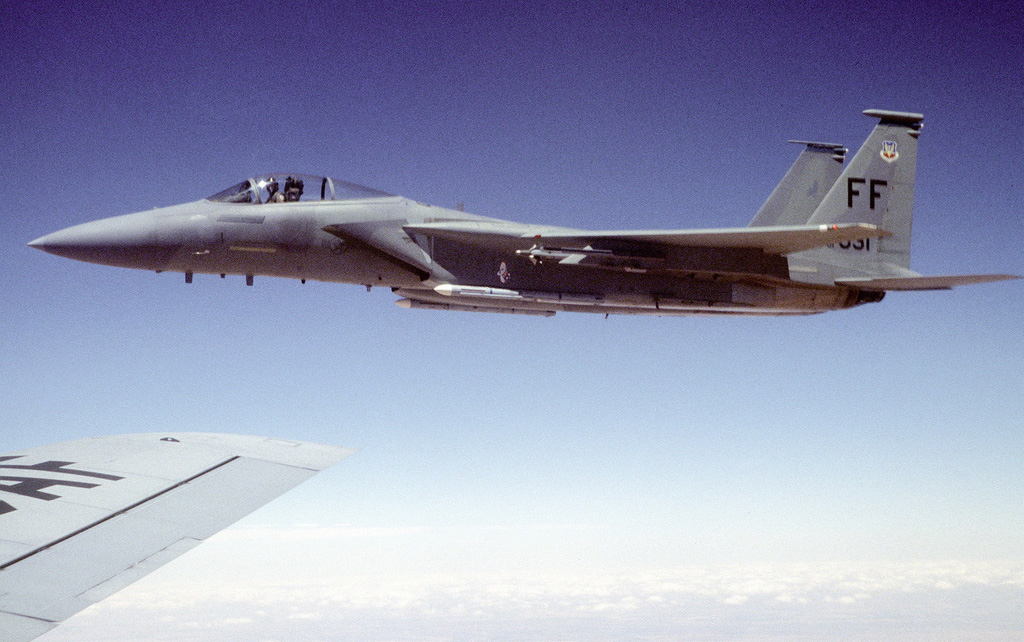
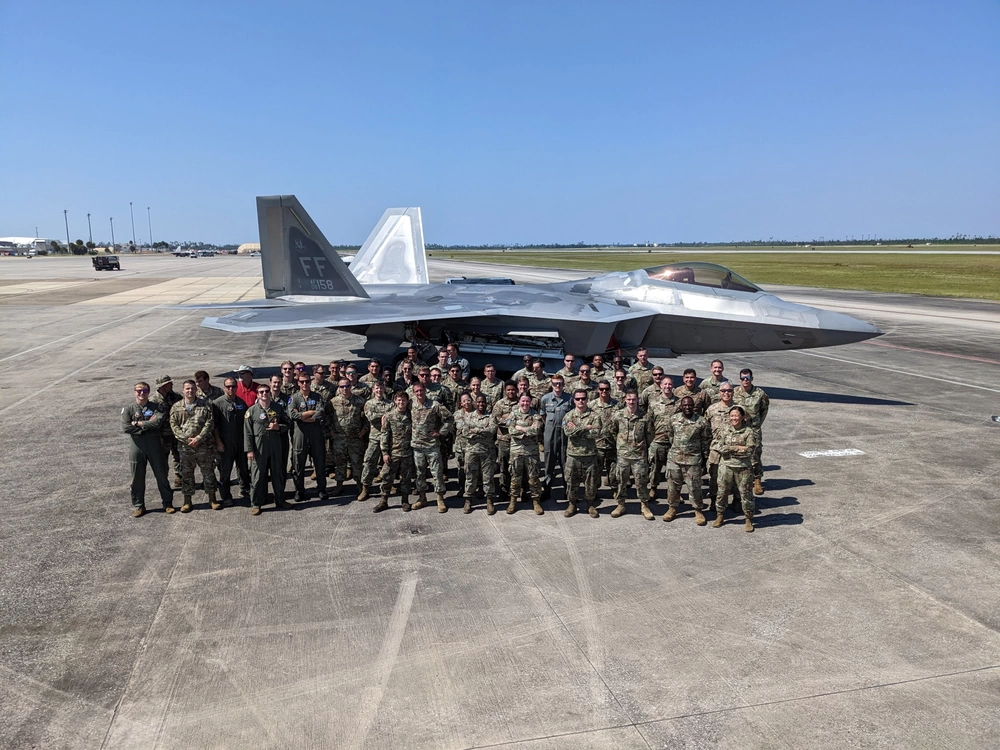
The squadron flies one of today’s most advanced air dominance fighters, the F-22A Raptor, being the USAF’s second operational F-22 squadron in 2006. 94th FS aircraft, like other aircraft from the 1st Fighter Wing, have the tail code “FF”.
The 94th Fighter Squadron Adapts to Modern Air Warfare
In May 1942, all pursuit groups and squadrons were re-designated “fighter”. In November the 94th Fighter Squadron entered combat in North Africa during Operation Torch. Based in Algeria, Tunisia, and Italy, the 94th again distinguished itself in combat by winning two Presidential Distinguished Unit Citations as part of the 1st Group. In addition, the squadron earned 14 Campaign honors, participating in almost every campaign in North Africa and Europe. 64 pilots of the 94th Fighter Squadron were credited with 124 Axis aircraft destroyed. The 94th produced a total of six aces in World War II. In April 1945 the 1st Fighter Group received two YP-80 jets for operational testing.
The 94th Fighter Squadron did not deploy to Southwest Asia for the first Persian Gulf War, although many of its pilots and maintenance personnel did as augmenters to both the 71st and 27th Fighter Squadrons from the 1st Fighter Wing. The 94th successfully supported the UN-sanctioned Operation Southern Watch and Operation Northern Watch in Iraq with many deployments to Saudi Arabia and Turkey in the period leading up to the Iraq War. The 94th Fighter Squadron pilots repeatedly defeated Iraqi surface-to-air missiles (SAMs) and anti-aircraft artillery (AAA) attacks while enforcing UN sanctions, without loss or damage to a single aircraft.
The 94th performed the first operational deployment of the F-22 to the CENTCOM area of responsibility in 2011. They continue to demonstrate Air Superiority and lethality in the fight against foreign enemies, recently completing the first combat employment of the Small Diameter Bomb from an F-22. Today, the “Hat in the Ring” stands as a cohesive combat-experienced team ready for any call to support our nation’s security requirements. The 94th continues the traditions of the Lafayette Escadrille, waiting to face any challenge, anywhere.
The 94th Fighter Squadron Carries Its Legacy Forward
The reknown Red Baron once announced, perhaps apocryphally, his realization that red was the most unwise choice for a color of his aerial warcraft. Today, the 94th FS is poised to, and shall, engage enemies foreign and domestic, flying skins which the Baron and America’s contemporary or future opponents could not acquire a sight line on in aerial battle, though they boast of their prowess. While there are no widely known specific poems written solely for the 94th Fighter Squadron itself, the squadron is often associated with the classic aviation poem “High Flight” by John Gillespie Magee Jr., a fellow fighter pilot.
The “High Flight” poem is deeply ingrained in the culture of military aviation and is often referenced by members of the U.S. Air Force and such notables as the late POTUS Ronald Reagan. The themes in “High Flight” – the exhilaration of flight, the bond with the sky, and proximity to the divine – resonate strongly with fighter pilots from all branches, squadrons, and eras.
“Oh! I have slipped the surly bonds of Earth
And danced the skies on laughter-silvered wings;
Sunward I’ve climbed, and joined the tumbling mirth
of sun-split clouds,—and done a hundred things
You have not dreamed of—wheeled and soared and swung
High in the sunlit silence. Hov’ring there,
I’ve chased the shouting wind along, and flung
My eager craft through footless halls of air.
Up, up the long, delirious, burning blue
I’ve topped the wind-swept heights with easy grace
Where never lark, or even eagle flew—
And, while with silent lifting mind I’ve trod
The high untrespassed sanctity of space,
Put out my hand, and touched the face of God.”
Motto:
AIR DOMINANCE — ANYTIME, ANYWHERE!
Read About Other Famous Military Units
If you enjoyed learning about 94th Fighter Squadron, we invite you to read about other Famous Units on our blog. You will also find military book reviews, veterans’ service reflections and more on the TogetherWeServed.com blog. If you are a veteran, find your military buddies, view historic boot camp photos, build a printable military service plaque, and more on TogetherWeServed.com today.
SHARE:




0 Comments