

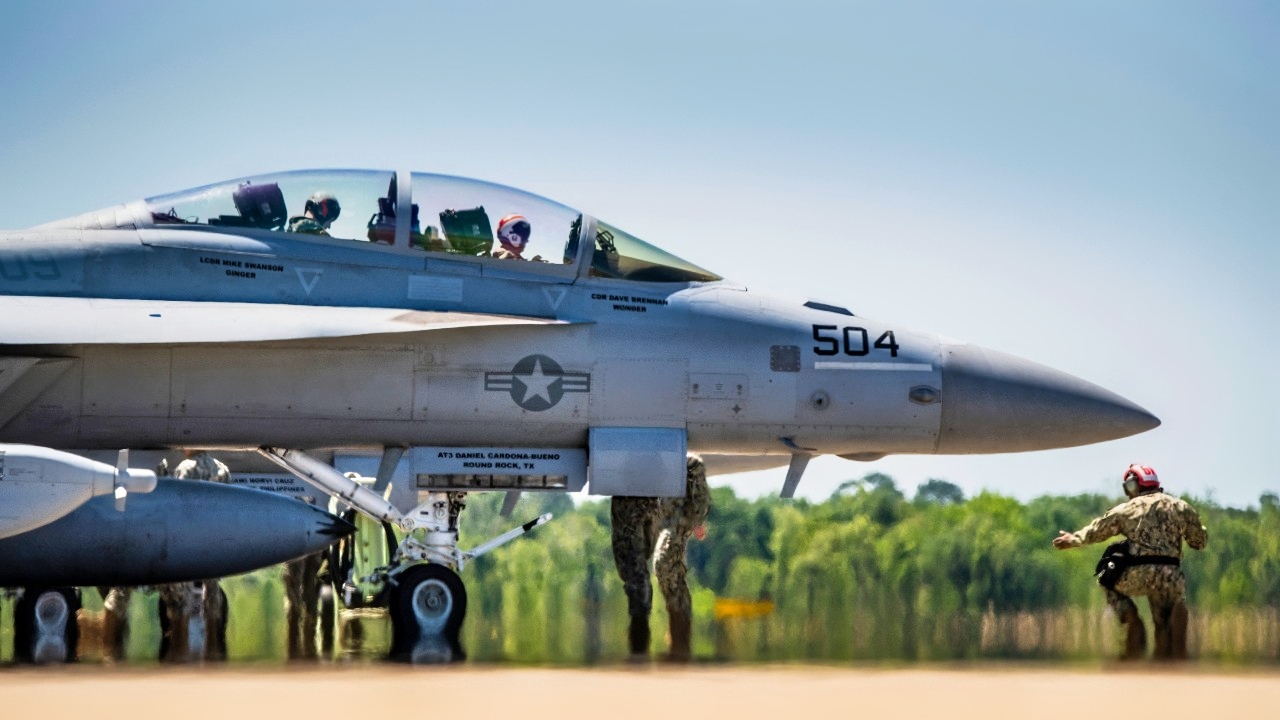
Neutralizing an integrated air defense system starts with knowing where it is. Once found, that’s where the fun begins. Enemy radar screens quickly become useless or start filling up with ghost targets. All that happens right before they become smoking holes in the ground at the invisible hands of the EA-18G Growler.
The EA-18G Growler Ghosts Enemy Radars
The Growler is the U.S. Navy‘s dedicated airborne electronic attack jet, built on the F/A-18F Super Hornet airframe and wired from nose to tail for electronic warfare. It primarily carries racks of receivers, processors, and transmitters. A two-person crew made up of a pilot up front and an electronic warfare officer backseater uses that hardware to find, blind, and (if necessary) kill enemy radar and communications nodes so other aircraft can survive.
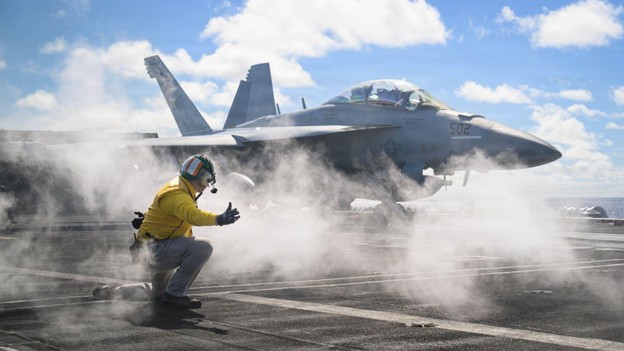
Operation Absolute Resolve gave the Growler its most high-profile real-world test in years. On Jan. 3, 2026, EA-18Gs were an integral part of a 150-plus aircraft strike package that included F-22s, F-35s, Super Hornets, B-1B bombers, and E-2D Hawkeyes, all working to punch a corridor into Caracas for special operations helicopters.
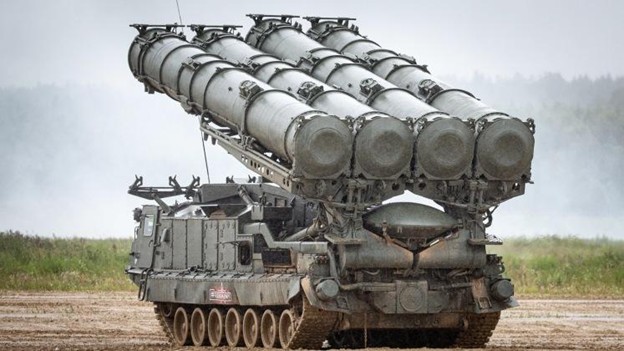
From positions over northern Venezuela and offshore, the Growlers used their receivers to lock onto Venezuelan S-300VM and Buk-M2 radars, then poured tailored jamming into those frequencies, turning what should have been a solid radar picture into broken tracks, dead zones, and phantom returns. Analysts describe the effect as “dismantling and disabling” the air-defense network just long enough for the assault force to move, rather than permanently erasing it.
The EA-18G Growler Bends the Battlespace to U.S. Advantage
The Growler’s defining system is the AN/ALQ-218 receiver suite, a network of wideband antennas and processors that constantly listens for hostile emissions. It detects, classifies, and geolocates radar and radio signals across a broad spectrum, turning invisible energy into icons on the aircrew’s displays. The plane’s APG-79 active electronically scanned array radar is another level of sensor, letting the crew build a picture of the battlespace even when the enemy is trying to stay silent.
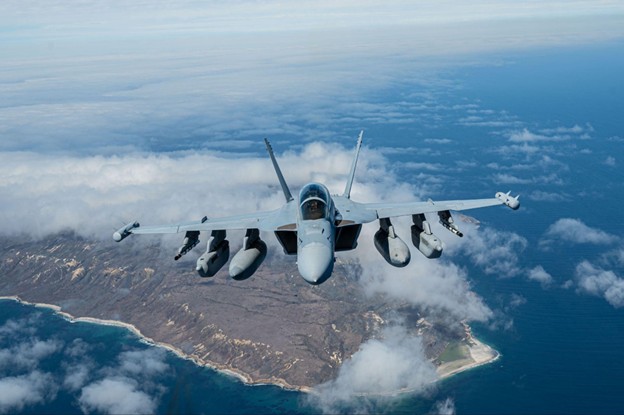
Once a Growler knows what is out there, it starts bending that environment. Under its wings and belly are ALQ-99 tactical jamming pods, each a self-powered transmitter designed to pour tailored radio-frequency energy into enemy systems.
Depending on the mission, the crew can blanket an area with noise so that hostile radars see nothing but electronic snow, or they can use more precise techniques to break specific modes, ranges, or frequencies. The same pod architecture supports both close escort jamming near the strike package and stand-off jamming from safer distances, forcing surface-to-air missile batteries and fighter controllers to fight half-blind.
The EA-18G Growler Disrupts Enemy Networks
Since modern air defenses are networks and not just radars and missiles, the Growler attacks those networks too. Its ALQ-227 communications countermeasures set and related systems are built to interfere with enemy radios, data links, and satellite connections, disrupting command and control across the battlespace.
At the same time, an interference-cancellation system lets the crew keep talking to friendly forces while they are jamming, something earlier generations of jamming aircraft could not do without workarounds.

In practice, that means the Growler can sit on top of an enemy’s tactical frequencies, garbling orders and cueing, while still passing targeting data to other jets and controllers.
All of that power would be less useful if the enemy’s radars could simply shut down and wait out the storm. That’s where the “attack” part of airborne electronic attack comes in. The Growler can carry AGM-88 HARM and newer AARGM anti-radiation missiles, which home on radar emissions. When a hostile radar lights up, the ALQ-218 suite can cue one of these weapons in seconds, either from the Growler itself or from other shooters in the formation. If the radar keeps transmitting, it risks taking a missile in the face. If it shuts down, it stops guiding missiles and providing early warning. Either way, the air defense node is out of the fight.
The EA-18G Growler Leads Precise Strikes
That cat-and-mouse dynamic is central to how the Growler neutralizes defenses. In a typical high-threat mission, Growlers launch ahead of or with strike aircraft, using their receivers to map out the enemy’s emitters in real time. As they approach the lethal rings of surface-to-air missile batteries, they begin jamming the long-range early warning radars, then the acquisition and fire-control radars closer in, creating lanes in the coverage.
When individual sites try to “burn through” the noise, their emissions make them stand out, letting the Growler crew mark them for HARMs, stand-off weapons, or follow-on strikes. What looks like chaos on the enemy side is carefully choreographed from the Growler’s cockpit.
Recent operations have shown how much that kind of choreography matters. In Libya, in the Middle East, and in Venezuela, Growlers were part of joint air components tasked with dismantling hostile air defenses at the opening bell, jamming radars and communications to clear paths for bombers, fighters, and helicopters.
Their mission in Venezuela was to enable helicopters from the 160th Special Operations Aviation Regiment to ferry Delta Force into and out of the city. Growlers kept that window open by continuously updating their jamming patterns as Venezuelan operators switched modes, bands, and backup systems. Working alongside other electronic warfare assets and cyber effects, they disrupted command links and communications so thoroughly that advanced Russian-made systems never executed a coherent kill chain, despite firing opportunities and at least one hit on a U.S. aircraft.
No American helicopters were shot down, and the raiders were back over water with Nicolás Maduro in custody before Venezuela’s air defenders could recover. For electronic warfare planners, the raid is now a case study in how a handful of EA-18Gs, properly integrated, can make a heavily defended capital behave like a soft target for a few decisive minutes.
The EA-18G Growler Adapts With New Technology
The Growler’s arsenal is still evolving. The long-serving ALQ-99 pods are being replaced by the Next Generation Jammer, a family of digital, AESA-based pods that promise more power, better focus, and faster reprogramming against modern threat radars.

The mid-band segment, designated AN/ALQ-249, has already reached initial operational capability and is now being deployed with fleet squadrons, giving the EA-18G new reach and flexibility against advanced integrated air defense systems. By design, these pods plug into the existing ALQ-218-driven architecture, turning the Growler into a modular platform that can be updated as quickly as adversaries roll out new sensors.
For pilots and planners, the result is a jet that does not just protect nearby aircraft; it reshapes the entire fight. An integrated air defense system is a machine built on time and information. Its radars must see early, its operators must talk clearly, and its missiles must launch under tight, coordinated timelines. The EA-18G Growler attacks each step in that chain, from the first sweep of a search radar to the last radio call between a battery commander and his launch crews.
When it does its job well, enemy defenses never get a clean shot and often never quite understand what went wrong until the strike force is already on its way home.
Read About Other Military Stories
If you enjoyed learning about the incredible capabilities of the EA-18G Growler, we invite you to read the stories of other remarkable soldiers and their heroic deeds on our blog. In addition to our profiles of celebrities who served, we share military book reviews, veterans’ service reflections, famous military units and more on the TogetherWeServed.com blog. If you are a veteran, find your military buddies, view historic boot camp photos, build a printable military service plaque, and more on TogetherWeServed.com today.
SHARE:




0 Comments