

PRESERVING A MILITARY LEGACY FOR FUTURE GENERATIONS
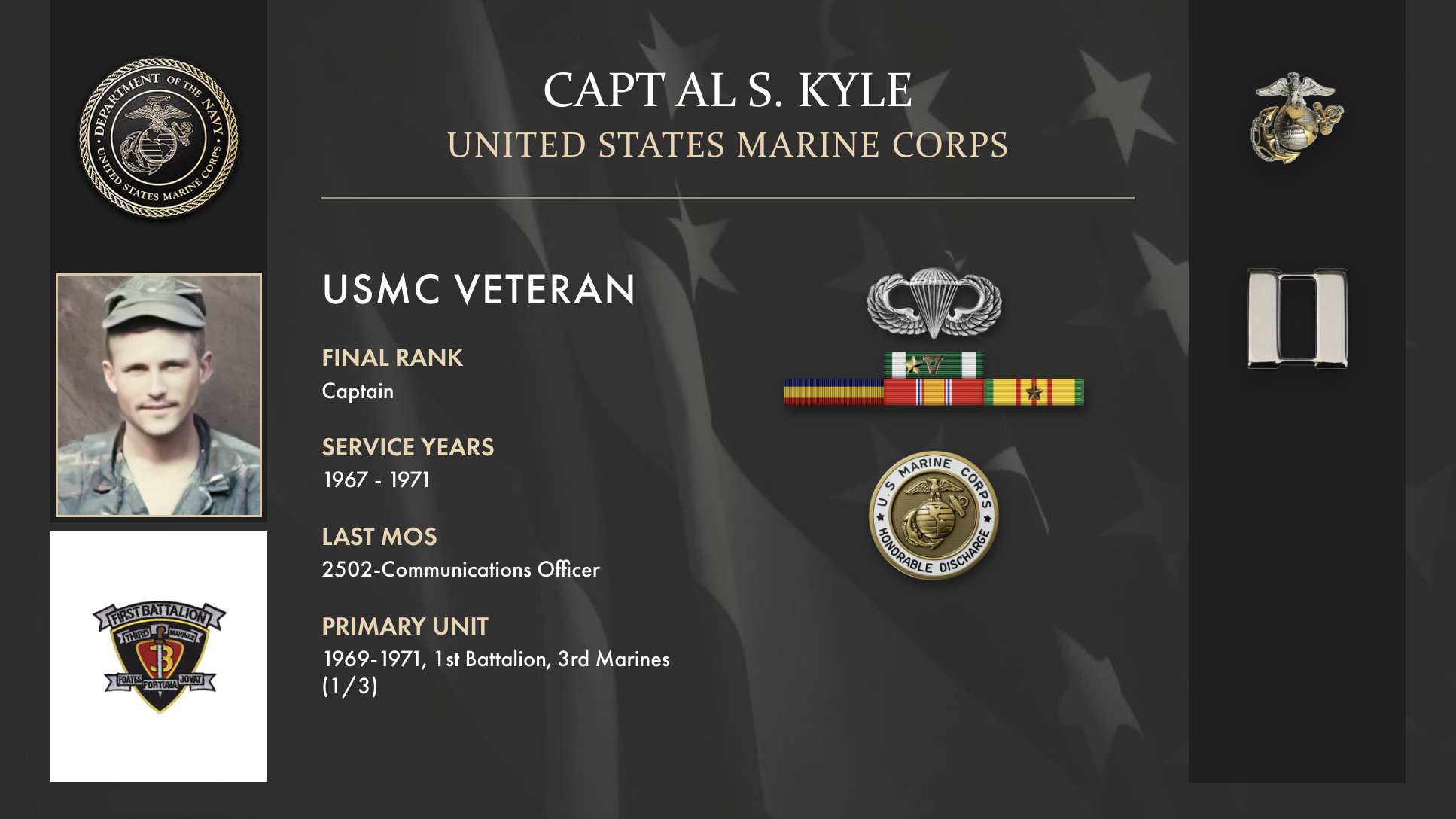
The following Reflections represents Capt Al Kyle’s legacy of his military service from 1967 to 1971. If you are a Veteran, consider preserving a record of your own military service, including your memories and photographs, on Togetherweserved.com (TWS), the leading archive of living military history. The following Service Reflections is an easy-to-complete self-interview, located on your TWS Military Service Page, which enables you to remember key people and events from your military service and the impact they made on your life. Start recording your own Military Memories HERE.
Please describe who or what influenced your decision to join the Marine Corps.
My dad and father-in-law were both career Marines – a big-time influence! Also, I had an NROTC scholarship to Duke University, and graduated in 1967.
Whether you were in the service for several years or as a career, please describe the direction or path you took. Where did you go to boot camp, and what units, bases, ships, or squadrons were you assigned to? What was your reason for leaving?
I was a Marine officer for four years, from 1967 to 1971. Before graduation, we were asked our preferences for a duty station. We were given three choices: West Coast, East Coast, or Vietnam, and were guaranteed to get one of our first three choices. HA! Virtually every graduate ended up in Vietnam.
After Officer Basic School (6 months), I attended Officer’s Communications School (2 months). Both schools were in Quantico, VA. Then I served in Vietnam as the Battalion Communications Officer for the Second Battalion, 12 Marines (2/12) for 13 months. I returned to Quantico and attended the Officer Communications School for 4 months. My last assignment was in Kaneohe, Hawaii, as Battalion Communications Officer for 1st Battalion, 3 Marines (1/3). I was discharged in August 1971.
If you participated in any military operations, including combat, humanitarian, and peacekeeping operations, please describe those that made a lasting impact on you and, if life-changing, in what way?
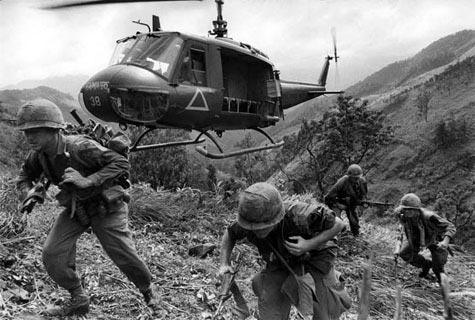
I participated in numerous military operations. Operation Dewey Canyon, a 3-month-long operation in the Da Kong and A Shau valleys, had a lasting impact on me. We had trained for high mobility operations, relying on helicopters. These operations relied on helicopters, and we were supported by both the Marine Air Wing and U.S. Army helicopters. Our division, the 3rd Marine Division, was part of XXIV Corps, commanded by a U.S. Army Lieutenant General, Richard Stilwell. At the end of the operation, General Stilwell recommended us for an Army Presidential Unit Citation – the only one awarded to a non-Army organization.
Did you encounter any situation during your military service when you believed there was a possibility you might not survive? If so, please describe what happened and what was the outcome.
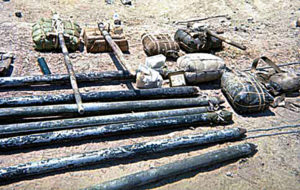
During Operation Dewey Canyon, our firebase was overrun by a North Vietnamese sapper platoon. Most of the sappers were killed, along with a few U.S. Marines who were on the lines that night.
The sappers managed to penetrate our perimeter and throw satchel charges in many of the gun Pits, and also in our Battalion Fire Direction center. No Marines were killed.
Of all your duty stations or assignments, which one do you have fondest memories of and why? Which was your least favorite?
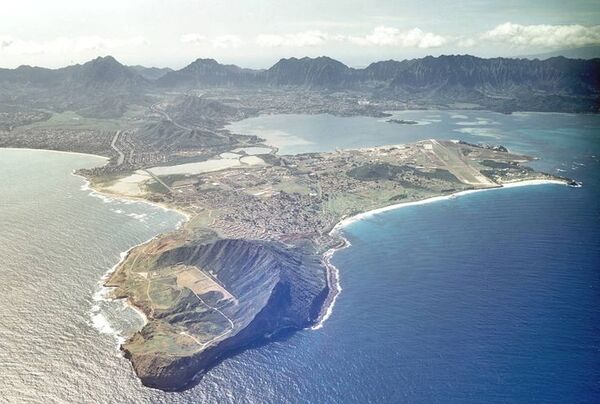
My fondest memories are of 12 years in Kaneohe, Hawaii. Our first child was born in Hawaii.
My least favorite is Vietnam.
From your entire military service, describe any memories you still reflect on to this day.
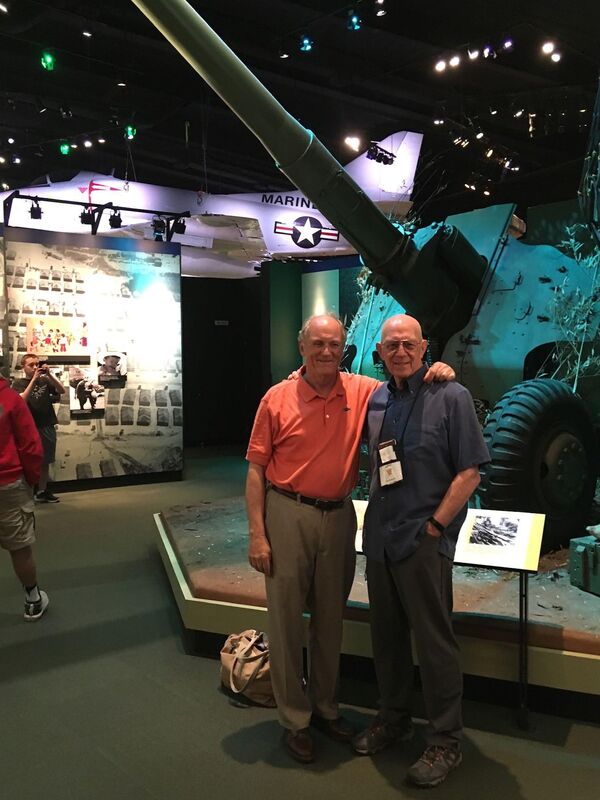
The writers of Courageous Dissent are former Marines who are collaborating on Vietnam War Stories. For three days in February 1969, our four paths crossed at Fire Support Base Cunningham when the North Vietnamese Army attacked our base. More than 50 years later, we are working together in Massachusetts, Florida, California, and Colorado. We all served with the 9th Marines in 1968-1969 and experienced firsthand the consequences of both an ill-planned war strategy and a highly successful military operation. Our post-Vietnam careers were very different: US Magistrate judge, Marine Lt Colonel, university professor, and medical device entrepreneur. Our personal notes follow the above official history of those days.
ILT Miles Davis (K Company, 3/9). ?It was February 17, 1969, and Operation Dewey Canyon was still hot. Earlier that morning, we had been hit by an NVA ambush. I had been shot during the melee and now had a hole in my hand which, left untreated, would quickly become infected. An hour later, a resupply helicopter picked me up along with two wounded Marines from another platoon in our company. I have never been hit by lightning, but I think I felt something like it when a tremendous explosion suddenly jolted the helicopter. Somehow, the pilot regained control, and by some miracle, we were still flying. The pilot headed north toward Fire Support Base Cunningham, about five miles away. The engines went silent. The helicopter dropped from several hundred feet, auto-rotating onto an LZ at Cunningham with a loud crunch. The helicopter was still there an hour later, when another helicopter took me to the field hospital. I had been hit once before, along the Da Krong River back in November ’68. Now I had been shot through the hand, and the helicopter crash fractured a vertebra in my lower back. The three injuries got me out of the jungle.
ILT John Cochenour (E Battery, 2/12). ?In the early morning of February 17, I was awake, talking with the XO’s recorder, and then went out to the piss tube. I was relaxed, my mind elsewhere, when mortars began falling inside the position. In the light of the fire in the gun pit, I could see running men silhouetted, and small-arms fire began to erupt from the perimeter infantry and my own gun pits. We had lost gun number one, and the gun position was unrecognizable. A few bodies of sappers were dragged down to a collection point. Our battery had four wounded Marines; three from gun one. We would medevac them and begin cleanup immediately, as two of the gun pits would need to be rebuilt — both would need repair. At the time, I thought this was a battle characterized by surprise and reaction, by defensive plans and preparation, and by the courage and initiative of the individual Marine and low-level non-commissioned officers. I believed it was a battle of some significance. Actually, I was part of only a small group of men in a very small hell.
ILT Bob Packard (Provisional Rifle Platoon, 2/3). I was with a provisional rifle platoon (‘every Marine is a rifleman’) that had been operating in and around Quang Tri for two or three weeks, as part of a provisional rifle company moving through town on trucks every day. We were “honored” to be diverted to FSB Cunningham for about 2 more weeks to help bolster the defenses there. The infantry Battalion on FSB Cunningham was the 2nd Battalion, 3rd Marines. They gave us the side of the perimeter that was least susceptible to attack because it was so steep there. I don’t remember seeing (ILT) Cochenour there, so I’d guess I was there a few days after the 17th. You (ILT Kyle) were deeply immersed in trying to sort out a huge tangle of comm wire when I saw you and hounded by the XO. I do remember a USMC Huey making a bad forced landing and burning up one day. In fact, a couple of other Marines and I tried and failed to extricate the pilot. I don’t know that it could have been (ILT) Miles Davis medevac.
ILT Al Kyle (HQ battery, 2/12). My own memory is of waking up in my hole, where I slept by myself. At first, I thought the attack was just mortars, so I stayed put until I heard Vietnamese yelling and screaming. According to the attached reports, many of the Sappers were heavily drugged, and that may account for the odd sounds. The Radio Chief, Cpl Frank Renner, arrived at the fire direction center (FDC) before I did and helped restore radio communications. I recall being asked by Major Condon to investigate restoring wire communications to the 4.2 mortars, given their importance in providing close fire support along the lines. LCpl JC Dye and Pete Hyla had already gone out to do that, and I went to find out the results, which were successful. Cleaning up the next morning was more memorable because of the number of sappers killed near the Battalion FDC. We lost one Marine in HQ battery, but fortunately, none in the Communications platoon.
What professional achievements are you most proud of from your military career?
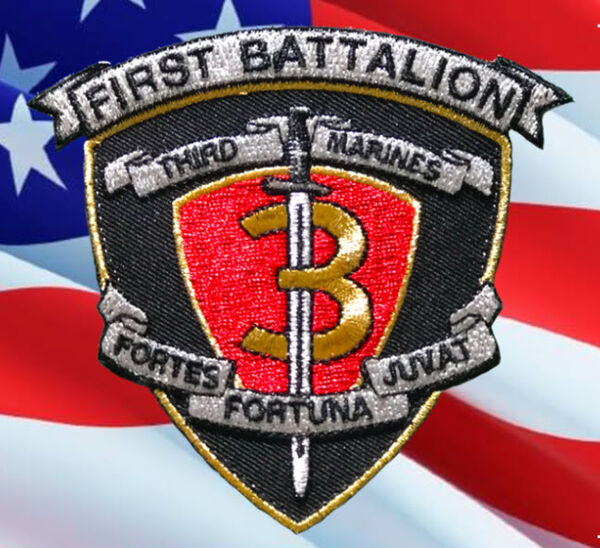
I was most proud of the Marines in my two Communications Platoons in Vietnam and Hawaii.
Of all the medals, awards, formal presentations and qualification badges you received, or other memorabilia, which one is the most meaningful to you and why?
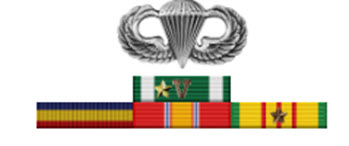
I was awarded two Navy Commendation medals for my service in Vietnam.
Which individual(s) from your time in the military stand out as having the most positive impact on you and why?
Most veterans answer this question by identifying a senior NCO or officer who had the most positive impact on them. The individual men in my platoon, all enlisted Marines, had the greatest impact on me. This became obvious to me when I tried to write a book—Courageous Dissent—a military history of the Vietnam War’s fighting strategy. The thesis of the book was the efforts by Marine Generals to change the minds of President Johnson, Secretary McNamara, and Secretary Westmoreland.
To tell the story of war-fighting, we added a combat narrative: an NVA sapper company attacking our base—FSB Cunningham in the A Shau Valley. Two Marines in my platoon were included in this narrative. Both were just “doing their jobs” – the same way that Marines have always done. The official account of that action was as follows:
“At 0430 hours on 17 February, the enemy launched an attack against FSB Cunningham, which featured a coordinated mortar/sapper attack, RPGs, concussion grenades, and satchel charges. The Battalion FDC was damaged (and the watch officer knocked unconscious) by several blasts, which also scattered radios and FDC equipment; however, technical fire direction was automatically decentralized in accordance with standard instructions, and the Battalion continued its mission without interruption. Centralized control was reestablished in about 30 minutes. One howitzer in Battery E was knocked out of action by a mortar round but was evacuated and replaced the following morning. 3,270 rounds were expended by 2/12 on self-defense missions, targets of opportunity, suspect assembly areas, and likely escape routes between 0430 and 0730, including 88 I.C.M. and 59 beehive rounds direct fire. 37 enemy KIA were found within the position at first light. Casualties sustained were 3 KIA (including 2 DOW) and 17 WIA.”
My own memory is of waking up in my hole, where I slept by myself. At first, I thought the attack was just mortars, so I stayed put until I heard Vietnamese yelling and screaming. According to the attached reports, many of the Sappers were heavily drugged, and that may account for the odd sounds. The Radio Chief—Cpl Frank Renner—arrived at the fire direction center (FDC) before I did, and he helped restore radio communications. I recall being asked by Major Condon to find out about restoring wire communications to the 4.2” mortars, because of their importance in providing close fire support around the lines. LCpl JC Dye and Pete Hyla had already gone out to do that, and I went to find out the results, which were successful. Cleaning up the next morning was more memorable because of the number of sappers killed near the Battalion FDC. We lost one Marine in HQ battery, but fortunately none in the Communications platoon.”
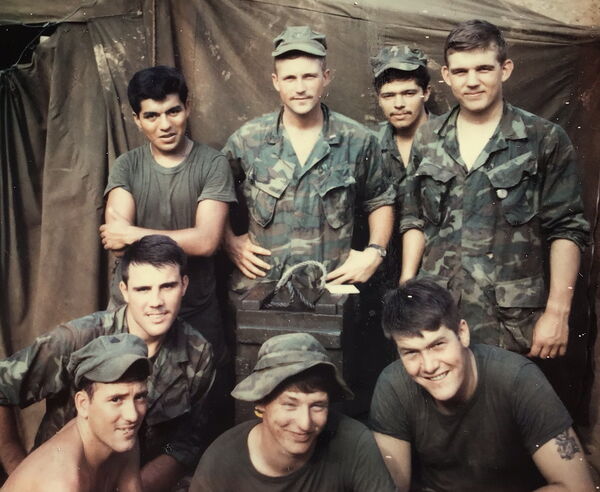
The attached photo shows seven members of my platoon. Corporal Frank Renner (lower left) and Lance Corporal J.C. Dye (center of the front row) were two of the best. Renner was the radio chief, typically a position for a sergeant, and Dye was a wireman. Vietnam was the last duty station for both.
Following Vietnam and discharge from the Marines, Renner returned to Pennsylvania in 1969, where he had graduated from Roman Catholic high school in 1966. He studied Machine Design Engineering Technology at Penn State Abington from 1970 to 1976, and worked at Picatinny and at Frankford Arsenal. Renner retired from the Army (civilian) after 45 years, designing Tank Ammunition.
Dye returned to Montana, where he worked as a cowboy at several ranches. Art is what brought calm back to J.C.’s life after serving in Vietnam, where he earned the Combat and Vietnamese Cross of Gallantry medals of honor. J.C.’s “real to life” sculptures of cowboys and wildlife found in private and public collections are best expressed in the words of one collector, “sensitive and accurately brilliant.”Currently, J.C. is represented in Trailside Gallery, Scottsdale, Arizona, and Jackson, Wyoming; Wind River Gallery, Aspen, Colorado; Broksosky, Gallery Ketchum, Idaho; Montana Trails, Bozeman, Montana, and Hoffman Fine Art, Park City, Utah.
Renner and Dye were two outstanding U.S. Marines. They, along with their ~30 colleagues, formed the communications platoon. Leading them took about half my time. In Vietnam, I had the commander of the communications platoon and the battalion communications officer, who took the other half. When I arrived in Vietnam, the Battalion staff consisted of a remarkably talented group of officers. The Battalion commander had recently earned his PhD from UC Berkeley. The executive officer was equally talented and enrolled at Harvard Business School after his Vietnam Tour was complete, graduating as a Baker Scholar. The operations officer served in the federal government after his tour, eventually as National Security Advisor to the President of the United States. The reg Commander referred to them as “the whiz kids.” Their professional attainment was extraordinary.
When I left Vietnam, our Marine regiment had recently completed a 77-day operation in the A Shau valley, and was awarded an Army Presidential unit citation, the only one granted to a non-Army unit in the Vietnam War. Khe Sanh, the DMZ, and the A Shau Valley had been our home for two years. I was surrounded by a truly remarkable group of Marines—both enlisted and officers. When taken together, they were the toughest challenges in the most difficult time of my life.
More than fifty years have passed since those days. The best answer to the question can be found in the October 17, 2023, New York Times. “As the U.S. Army, Navy, and Air Force Struggle for Recruits, The Marines Have Plenty.” The Marine Corps ended the recruiting year having met 100% of its goal. The other three services together fell short by more than 25,000 recruits.
“The few and the proud” in our communications platoon had the most positive impact on me.
List the names of old friends you served with, at which locations, and recount what you remember most about them. Indicate those you are already in touch with and those you would like to make contact with.
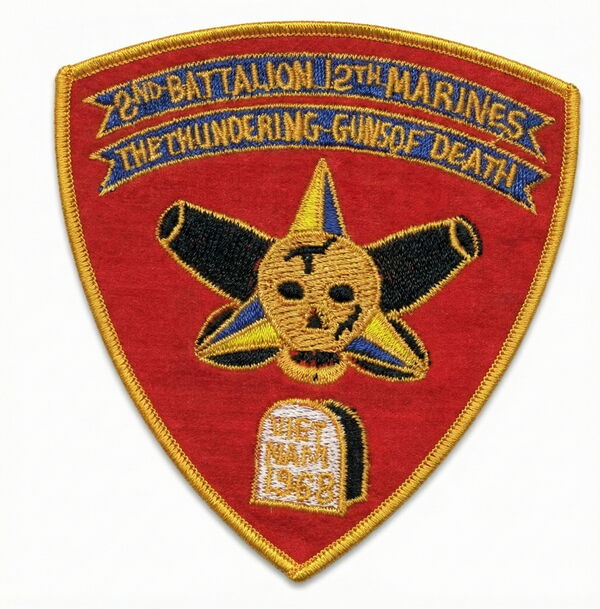
Old friends I served with in Vietnam include John Cochenour, who served as forward observer, E Battery 2/12 executive officer, and also as fire direction officer in our Fire Direction Center for Battalion 2/12. We were very good friends in Vietnam, and have kept up since then.
What profession did you follow after your military service, and what are you doing now? If you are currently serving, what is your present occupational specialty?

I attended business school and earned a Master’s in Business Administration. Twenty-five years with Hewlett-Packard Medical products. After that, I managed three startup companies, all medical device companies. Two failed clinical trials, and the third one succeeded. Then, I wrote a book about military strategy in Vietnam: Courageous Dissent. Now, I write essays for military strategy for the Naval Academy and Marine Corps schools.
What profession did you follow after your military service, and what are you doing now? If you are currently serving, what is your present occupational specialty?
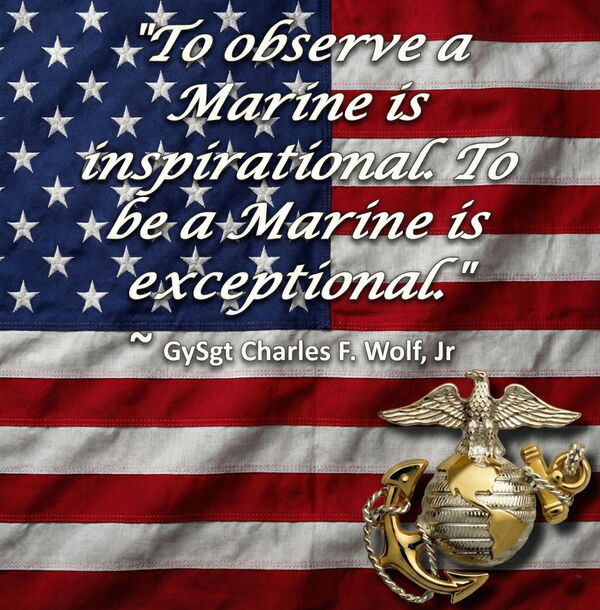
Four years in the Marines had a profound impact on my life. I recommend that everyone should seek to be part of an organization that is “bigger than themselves” — church, school, profession, something. For me, it was the Marines.
Based on your own experiences, what advice would you give to those who have recently joined the Marine Corps?
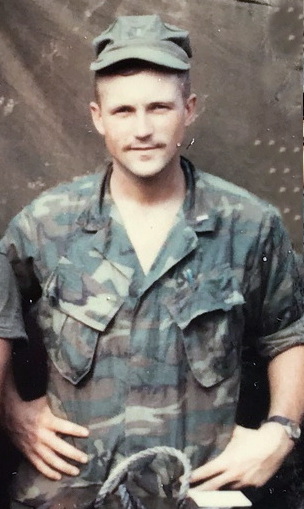
Find out a specialty, a billet, or maybe a location that you will look back on — and choose it. It may or may not contribute to your profession, but it will always be remembered.
In what ways has TogetherWeServed.com helped you remember your military service and the friends you served with?
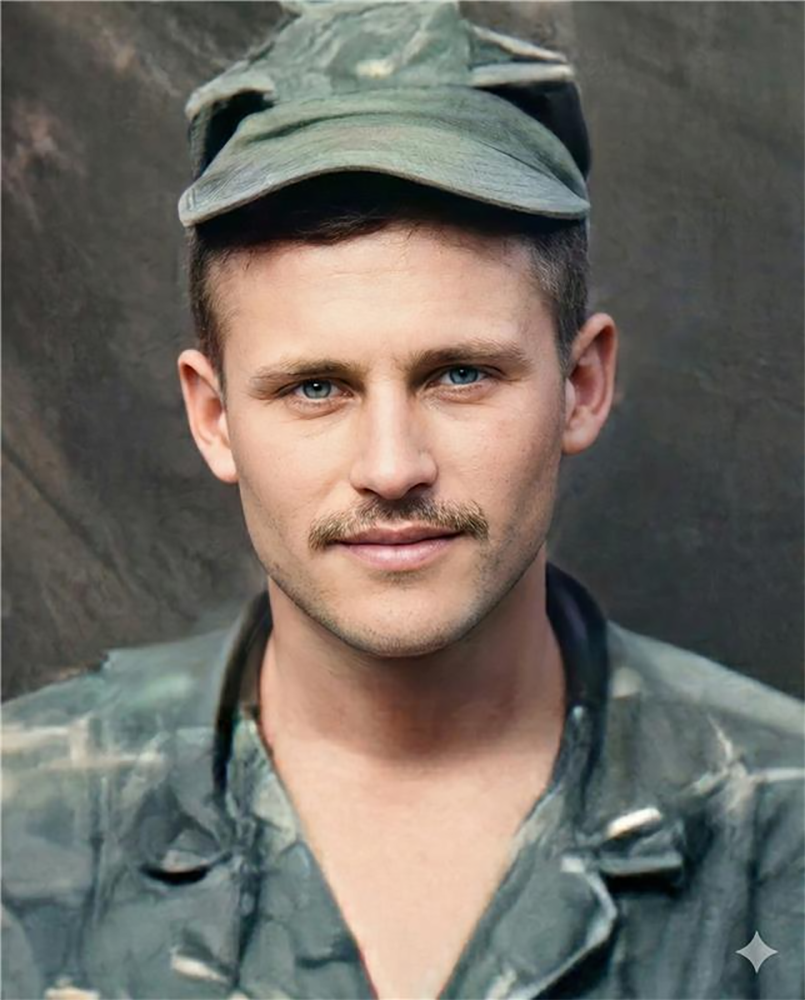
Each time I read TogetherWeServed, it brings back memories of people, places, jobs, and organizations.
PRESERVE YOUR OWN SERVICE MEMORIES!
Boot Camp, Units, Combat Operations
Join Togetherweserved.com to Create a Legacy of Your Service
U.S. Marine Corps, U.S. Navy, U.S. Air Force, U.S. Army, U.S. Coast Guard
SHARE:




0 Comments