Battlefield Chronicles

WW1 – Battle of Saint-Mihiel

WW1 – Battle of Saint-Mihiel

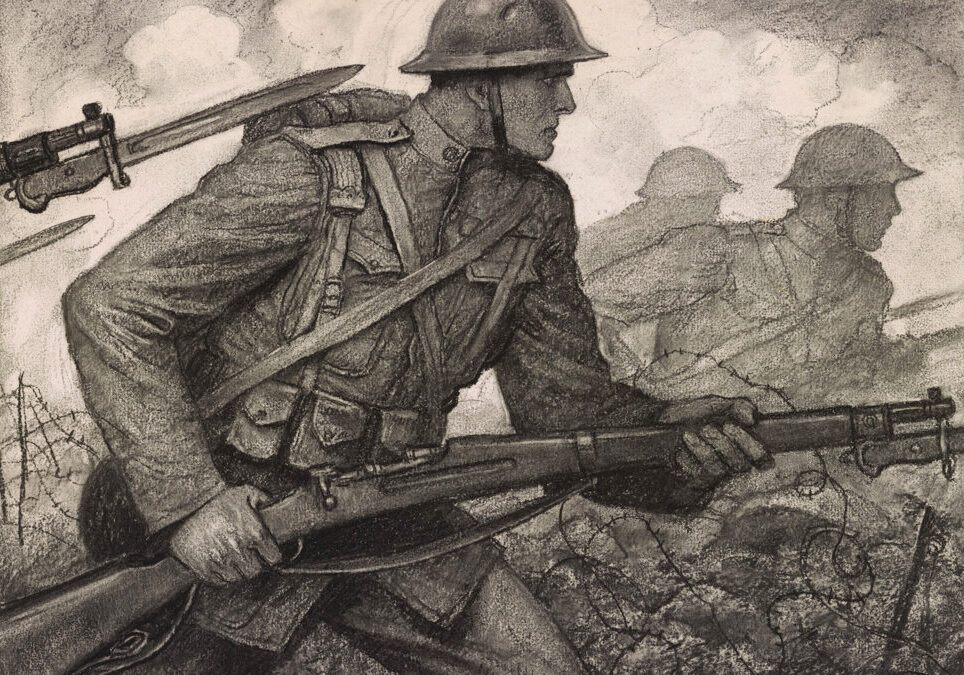
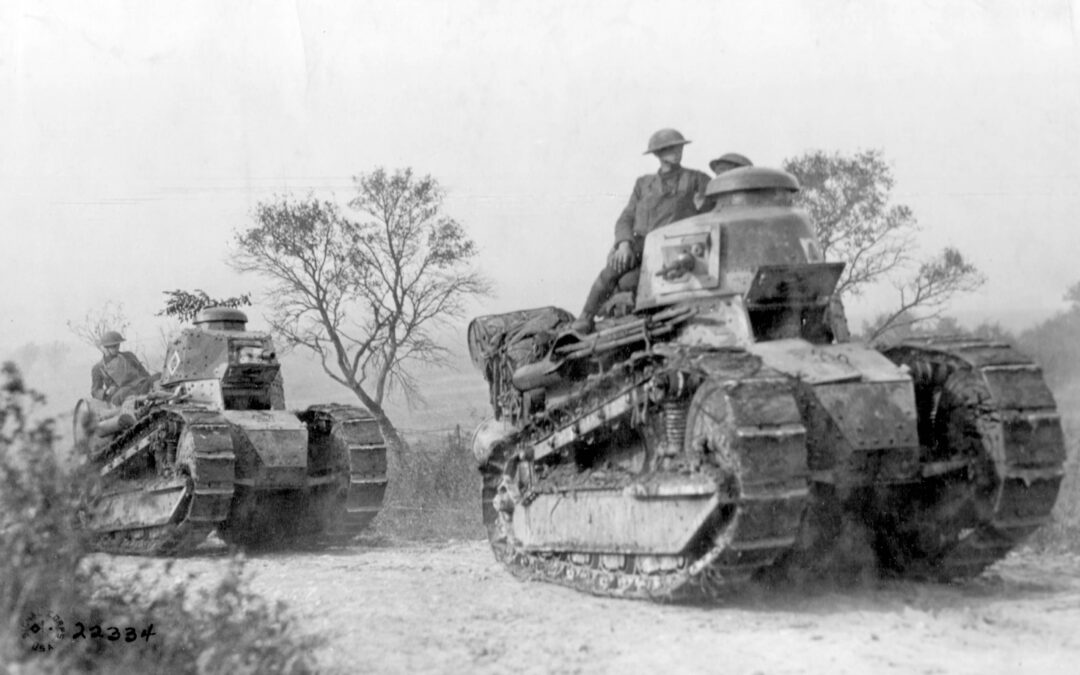
The United States entered World War I on April 6, 1917, when it declared war on Germany. The declaration came after a series of provocative acts from the German military and diplomatic corps. U.S. troops arrived in Europe by June 1917 but were largely ill-prepared for the kind of fighting taking place on the western front.  Preparation for the Saint-Mihiel Battle For months, American soldiers were used to augment French and British forces in Europe. As training improved and the number of veteran U.S. troops increased, Americans reasserted control of their forces. By September 1918, Gen. John J. Pershing had taken command of the American First Army and would lead them into combat at Saint-Mihiel.  Pershing was leading the largest American offensive operation ever assembled for combat in the first time American troops were deployed to defend a foreign country.  The Germans had captured Saint-Mihiel early on in the war, and its position cut a hole in the French Army’s line of...

read more
The Battle of New Orleans

The Battle of New Orleans

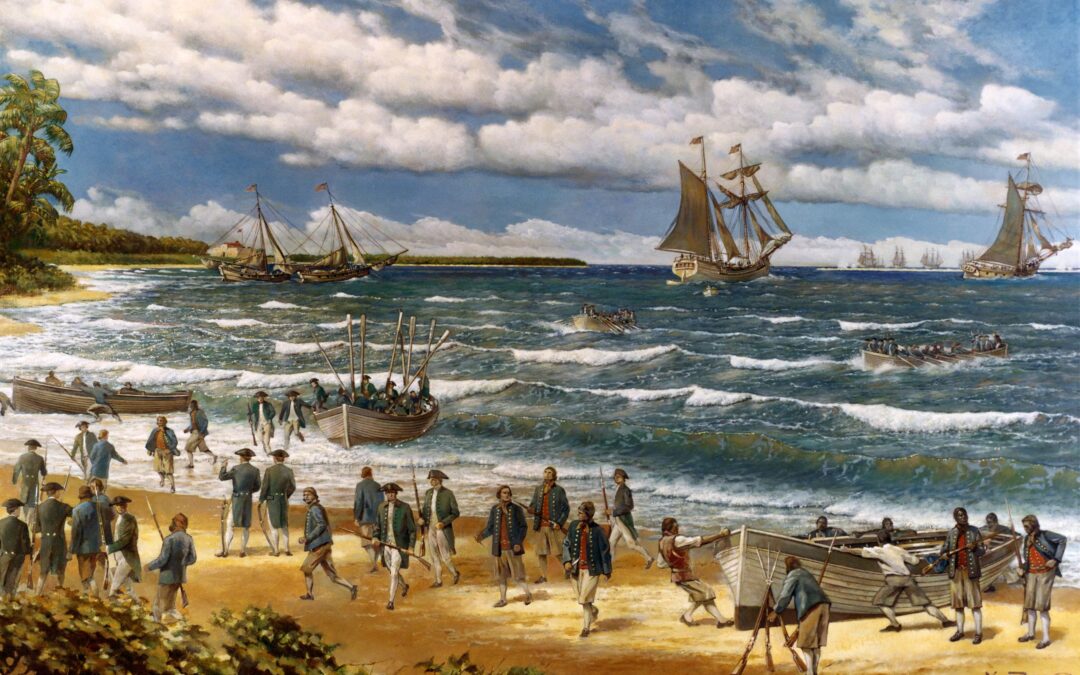
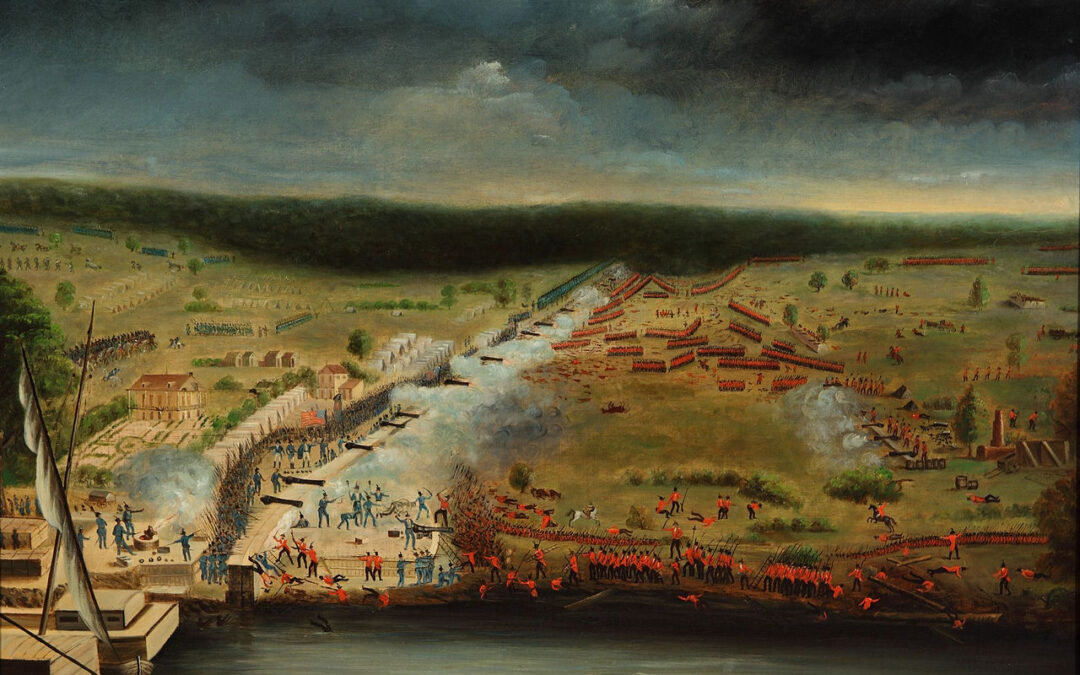
The War of 1812 held a lot of meaning for the young United States. It was an assertion of its independence from Great Britain, a demand to be recognized and respected as a nation of the world, and it was a chance to show that the U.S. would assert itself militarily if the need arose.  What most people, even Americans, remember about the War of 1812 (aside from the burning of the White House) is that the conflict was fought to a draw. Very little tangibly changed following nearly three years of war - not a bad outcome for a young country fighting what was arguably the world’s greatest power at the time.  Background of The Battle of New Orleans The real, lasting outcome of the war actually came after the war’s end: the Battle of New Orleans. Neither side knew that a peace treaty had been signed, but the battle was still important, as American determination and skill in combat forced the British to abide by the terms of the treaty.  It also ensured that New Orleans,...

read more
The Battle of the Alamo

The Battle of the Alamo

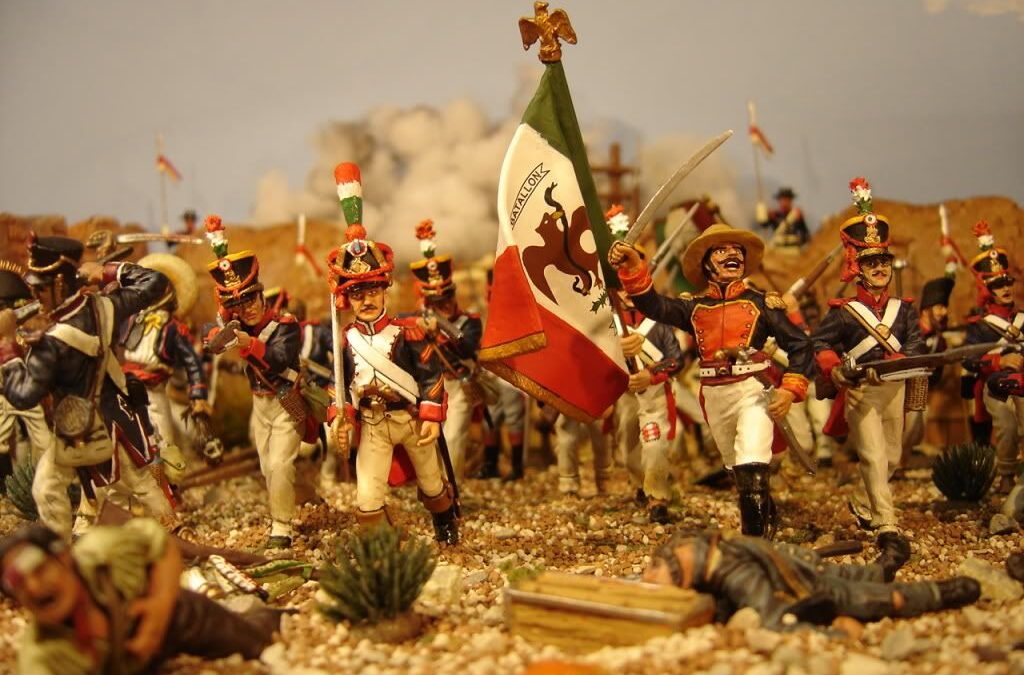
Few battles in American history resound so powerfully in our collective memory as that of the Alamo. The Battle of the Alamo had everything we could ever want in an epic story. It featured a handful of defenders fighting for freedom, facing down an overwhelming but cruel enemy, and among those defenders were some of America's most legendary names.  When the defenders of the Alamo were killed to the last man, it inspired a country to take up arms and win their freedom, lest they all meet the same fate. The Texians who fought at the Alamo may not have won the battle, but their sacrifice helped win the war and freedom for their country.  Background of the Battle of the Alamo For years before the battle, Texas enjoyed a swell of population and the autonomy to grow far from the heavy hand of government from Mexico City. When General Antonio Lopez de Santa Anna came to power in 1832 and changed all that. By 1835, he consolidated power and tried to rule through a more centralized...

read more
Vietnam War – Battle of Ngok Tavak & Kham Duc

Vietnam War – Battle of Ngok Tavak & Kham Duc

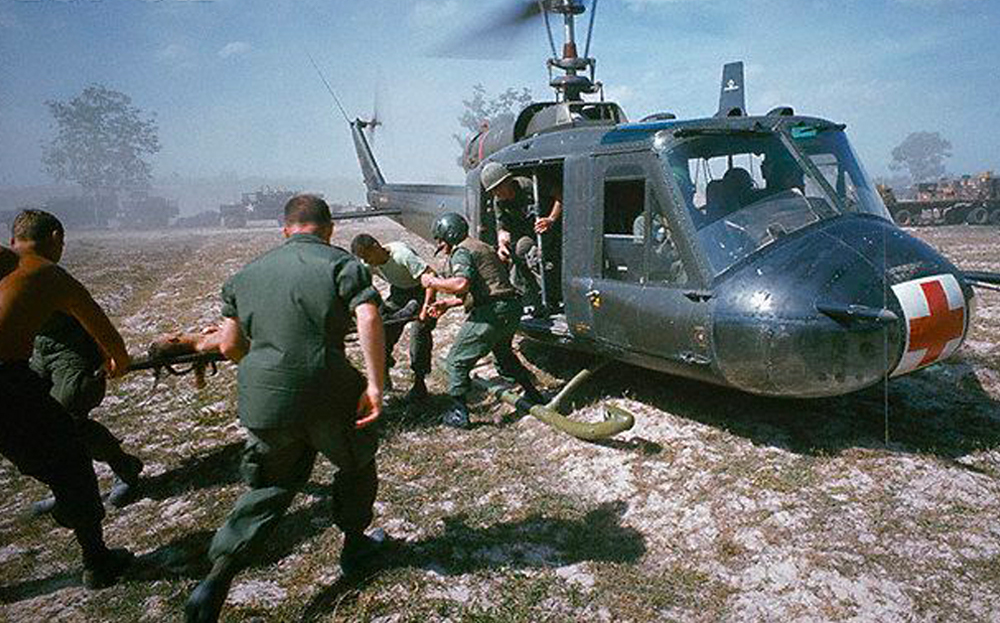
Kham Duc Special Forces Camp (A-105), was located on the western fringes of Quang Tin Province, South Vietnam. In the spring of 1968, it was the only remaining border camp in Military Region I. Backup responsibility for the camp fell on the 23rd Infantry Division (Americal), based at Chu Lai on the far side of the province. The camp had originally been built for President Diem, who enjoyed hunting in the area. The 1st Special Forces Detachment (A-727B) arrived in September 1963 and found the outpost to be an ideal border surveillance site with an existing airfield. The camp was located on a narrow grassy plain surrounded by rugged, virtually uninhabited jungle. The only village in the area, located across the airstrip, was occupied by post dependents, camp followers, and merchants. The camp and airstrip were bordered by the Ngok Peng Bum ridge to the west and Ngok Pe Xar mountain, looming over Kham Duc to the east. Steeply banked streams full of rapids and waterfalls cut through the...

read more
WW1 – Meuse-Argonne Offensive

WW1 – Meuse-Argonne Offensive

World War I will be remembered as one of the bloodiest wars in human history. Millions of soldiers died on both sides, and whole generations of young men were wiped out. Armies were bogged down in impenetrable trenches, resulting in thousands dying in futile assaults against fortified enemies. The war also introduced new and terrible weapons, such as the machine gun, which made the war even more horrific and bloody. There were many terrible battles, but the worst one for the American Expeditionary Forces (AEF) was the Meuse-Argonne Offensive. On August 30, 1918, the supreme commander of Allied forces, Marshal Ferdinand Foch, arrived at the headquarters of General John J. Pershing's 1st US Army. Foch ordered Pershing to effectively shelve a planned offensive against the St. Mihiel salient as he wished to use the American troops piecemeal to support a British offensive to the north. Outraged, Pershing refused to let his command be broken apart and argued in favor of moving forward with...

read more
Vietnam War – Operation Crazy Horse (1966)

Vietnam War – Operation Crazy Horse (1966)

On May 20, 1966, close to dusk and in a light rain, B Company, 1st Battalion, 8th Cavalry (ABN/AMB), 1st Brigade, 1st Cavalry Division, commanded by Capt. Roy D. Martin was airlifted by Chinook helicopters (CH-47s) into a small clearing located in the mountains east of the Vinh Thanh Valley, Republic of Vietnam. The clearing had been designated LZ Horse and could accommodate only one CH-47 at a time.  The company had been ordered to the LZ to begin operations in search of a large NVA/VC force that had been heavily engaged with other units of the 1st Brigade since May 16th. Specifically, B Company along with C Company 1/8th were to link up on the morning of the 21st and generally proceed along a trail and streambed to the northeast of LZ Horse to engage and defeat an enemy force suspected of being in the area. Capt. William Mozey had arrived earlier that afternoon and had been committed in support of another unit who was heavily engaged to the north of LZ Horse. C Company had...

read more
WW2 – Behind Enemy Lines – The 82nd and 101st Airborne on D-Day (1944)

WW2 – Behind Enemy Lines – The 82nd and 101st Airborne on D-Day (1944)

The amphibious landings of D-Day were hours away when the first combat missions by the US Army started in France. The invasion of Normandy began with a large-scale parachute drop that included 13,100 Soldiers of the 82nd and the 101st Airborne Divisions. The attack occurred during the night in the early hours of June 6th, 1944, and was the vanguard of the Allied operations in Normandy. D-Day Airborne Assault: Planning and Preparation The troops were all part of the US VII Corps assigned to capture Cherbourg, the coastal city in Normandy, that would serve as a supply port for the Allied troops after the landing. They were also tasked with a specific mission: to block approaches into the vicinity of the amphibious landing at Utah Beach, to capture causeway exits off the beaches, and to establish crossings over the Douve River at Carentan to assist the US V Corps in joining up the two American beachheads. Once the paratroopers landed, all hell broke loose. The heavy fighting marked the...

read more