

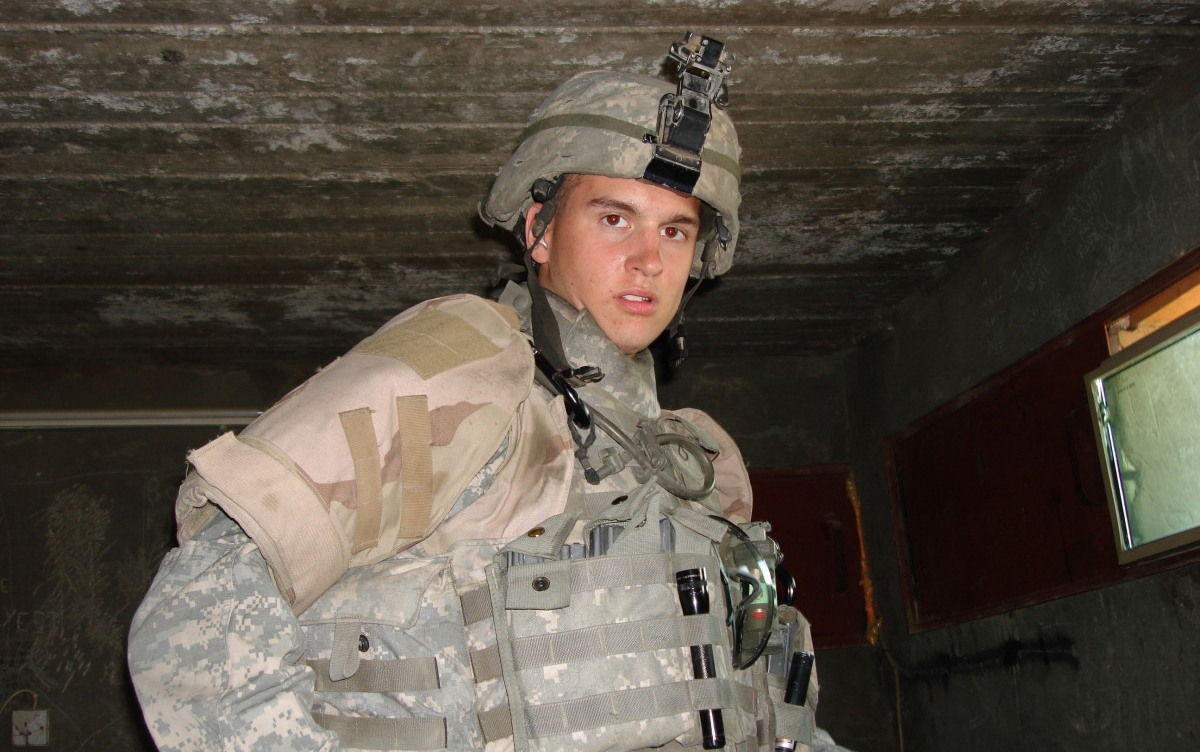
On the afternoon of Dec. 4, 2006, a Humvee rolled through the narrow streets of Adhamiya, a tense neighborhood in northeast Baghdad. It was one of hundreds of patrols that had blurred together for the men of 1st Platoon, C Company, 1st Battalion, 26th Infantry Regiment. The mission that day was the same as it had been for months: show presence, deter sectarian violence, and make it just a little harder for insurgents to own the streets.
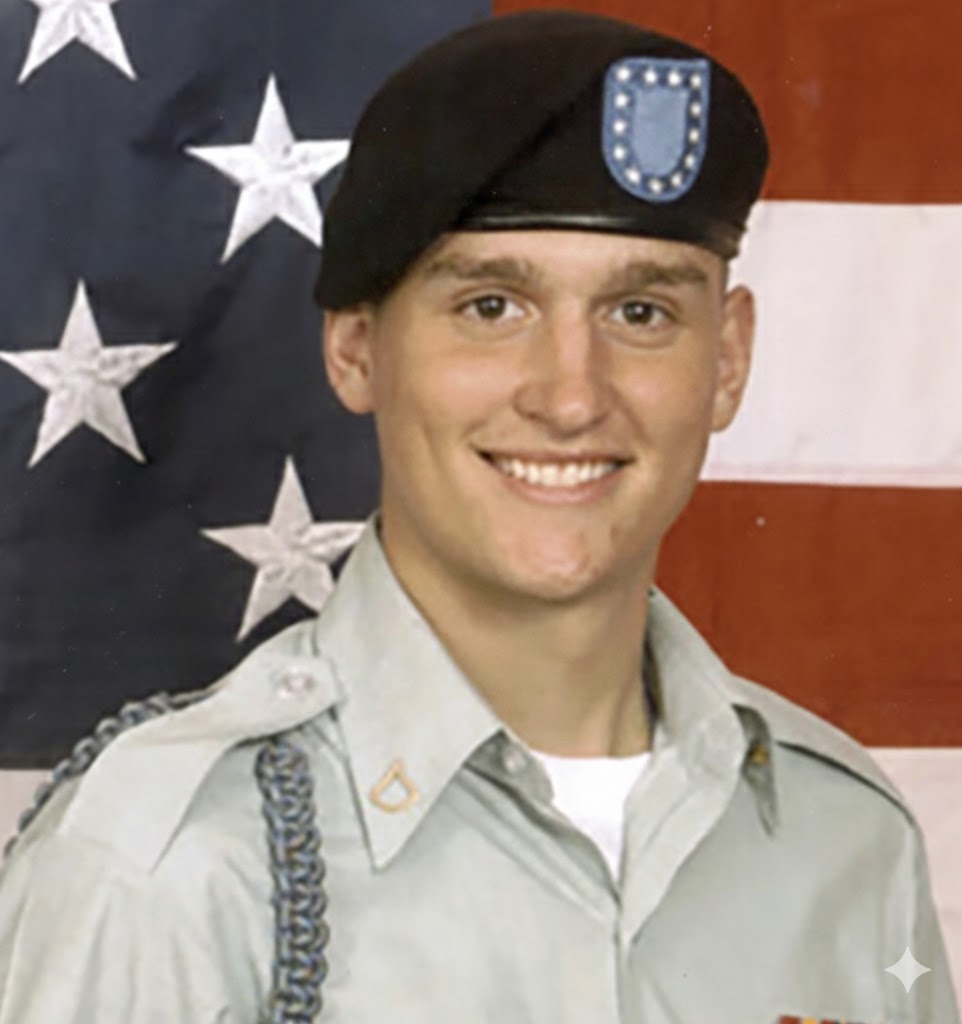
Ross Andrew McGinnis Grew Up Wanting to Be a Soldier
In the turret, behind the big Ma Deuce machine gun, stood a 19-year-old private first class from Pennsylvania: Ross Andrew McGinnis. He was tall and lanky, with a kid’s face that didn’t look old enough for combat gear. By the time he reached Baghdad, everyone knew his backstory.
When he was in Kindergarten, his teacher told the class to draw what they wanted to be when they grew up. McGinnis drew a soldier. He meant it. He joined the Army on his 17th birthday through the Delayed Entry Program, went to basic at Fort Benning, and eventually landed in C Company, 1-26 Infantry, part of the 1st Infantry Division attached to 2nd Brigade, 2nd Infantry Division.
By late 2006, his unit was deep into a brutal tour in eastern Baghdad. The men lived out of a former palace-turned-outpost, running near-constant patrols in an area where ambushes, IEDs, and sniper fire were part of daily life. Adhamiya was the kind of place where every alley could hide a rifle and every rooftop could conceal an insurgent.
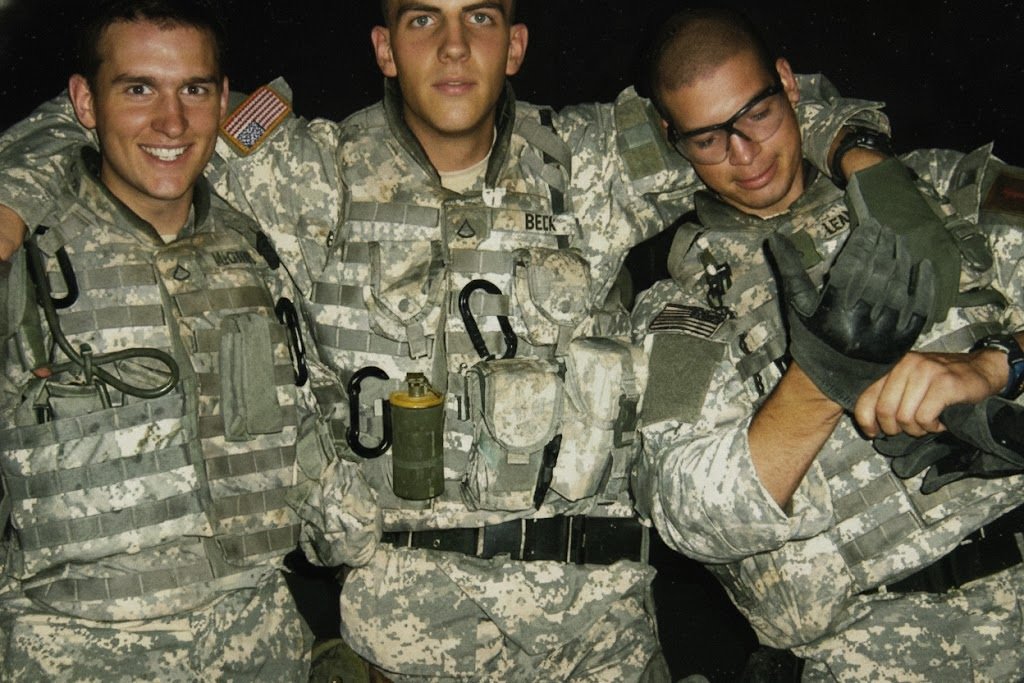
Ross Andrew McGinnis Faced Deadly Patrols
That day, McGinnis was doing what he did most often: riding as the gunner in a Humvee, standing in the turret, harnessed in, scanning the rooftops for threats. Inside the vehicle with him were four other soldiers: the driver, Commander, and two more in the back. It was a standard combat patrol. Perhaps routine, but never really safe.
At some point on that patrol, an insurgent watched the Humvee long enough to see his chance.

From a rooftop or a window (it’s described differently in various accounts) an insurgent hurled a fragmentation grenade toward the vehicle. The grenade arced toward the turret, slipped past the shield, and dropped straight through the open gunner’s hatch, landing inside the cramped, armored shell of the Humvee.
For a split second, McGinnis was the only one who knew what had happened. He heard it. He saw it. The others inside did not. He reacted instantly.
He shouted one word: “Grenade!” which bought the rest of the crew a heartbeat of awareness. According to his Medal of Honor citation, his shout allowed the four men inside to react—to duck, turn, brace, do anything they could to survive what was about to happen.
One Split-Second Decision Saved Four Lives
In that same tiny slice of time, McGinnis had a way out. As the gunner, he was standing in the turret, his upper body exposed. The hatch above him was open to the sky. The most natural, instinctive reaction would have been to launch himself out of the vehicle, drop down the side, and hope the blast stayed contained inside. He would have been fully justified in doing exactly that. No one would have faulted him; no one would even have had time to see the choice he made.
Rather than jumping away, McGinnis dropped down into the vehicle. The grenade was at his feet, on the floor of the Humvee, in the middle of the four men who couldn’t escape. He could have tried to pick it up and throw it out, but there was no time and no room. The inside of a Humvee is a steel closet; any motion is slow, awkward, snagged by gear and webbing. He did the one thing that guaranteed his friends a chance to live.
He lowered himself onto the grenade, pressing it to the floor with his body, pinning it there. He curled over it, turning his own torso into a shield. When it detonated, the blast and shrapnel tore through him instead of through the others.
The explosion was devastating at point-blank range. McGinnis was mortally wounded. But the four men inside the Humvee survived. They were wounded, but they lived. The bulk of the grenade’s force and lethal fragments were trapped between his body and the vehicle’s floor.
Ross Andrew McGinnis Left a Legacy Defined by Self-Sacrifice
Later, the Army and the White House would use careful phrases like “conspicuous gallantry and intrepidity above and beyond the call of duty.” They would describe how he “made the courageous decision to protect his crew” and “absorbed most of the explosion.” But the core of it is brutally simple: a teenager from Pennsylvania saw a grenade inside his truck and chose, in less than a second, to die so four other people wouldn’t.
In the aftermath, his platoon had to do the hardest thing soldiers do: keep operating. But the story of what happened in that Humvee on Dec. 4, 2006, traveled outward—first within the platoon, then the battalion, then the brigade, and finally across the Army. The four soldiers whose lives he saved carried the weight of that day in a way no citation can fully convey.
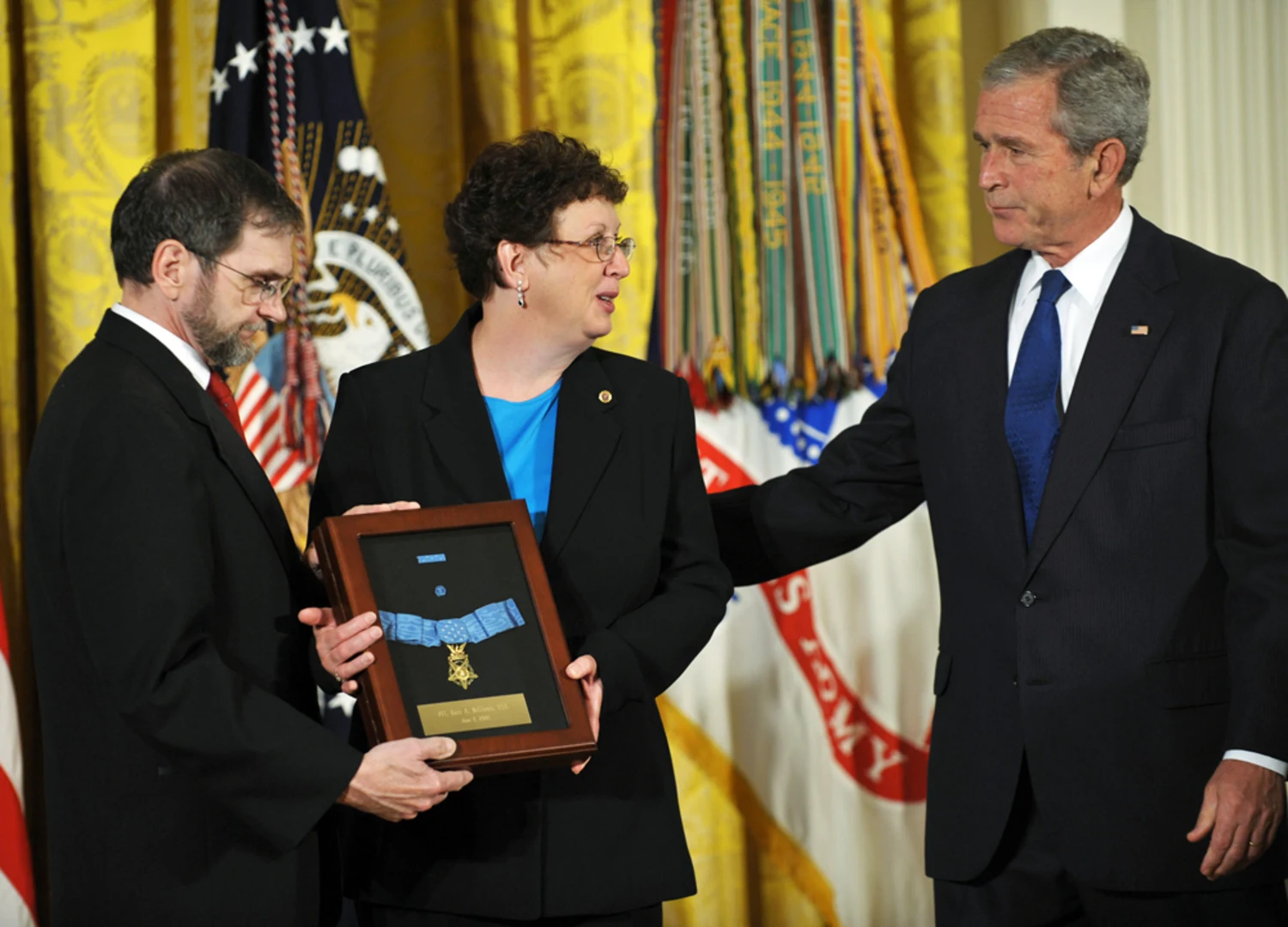
On June 2, 2008, his parents stood in the East Room of the White House to receive his Medal of Honor from President George W. Bush. By then, McGinnis had been posthumously promoted to specialist, but the citation read out loud still began with the name everyone in his unit knew: Pfc. Ross A. McGinnis.
The president spoke about a young man who had wanted to be a soldier since kindergarten, about a 19-year-old gunner in a dusty Baghdad neighborhood, about a grenade that fell through a hatch. “For his heroism that day,” Bush said, “he now receives the Medal of Honor.”
In a war full of complex politics and messy narratives, McGinnis’ story is almost stark in its clarity. There’s no ambiguity about what happened in the seconds after that grenade came through the hatch. The Army’s own summary is blunt: he could have escaped, but he didn’t. He made one decision, and four men lived.
That’s the entire story and somehow still not enough—because what you’re really left with is the unanswerable question at the center of every act of valor like this: What kind of person does that?
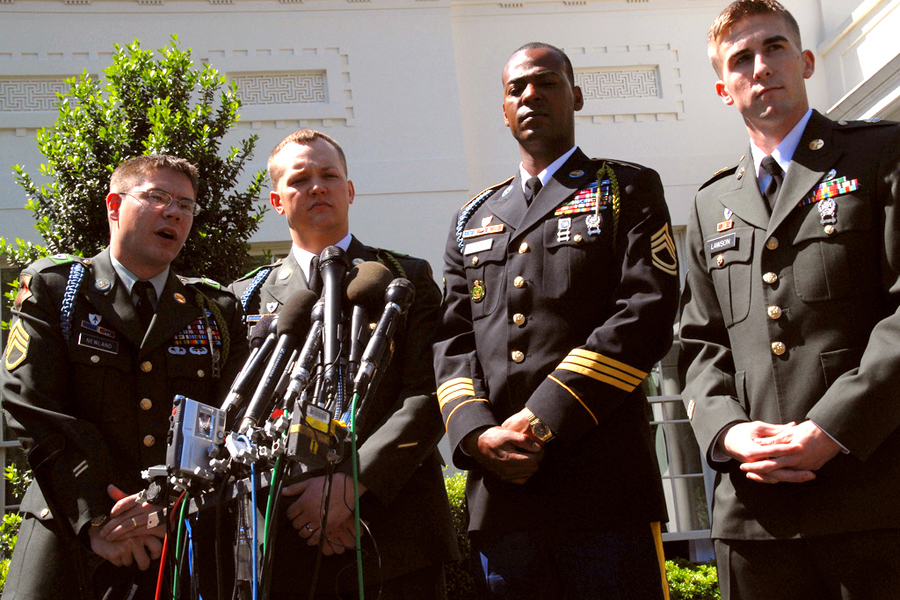
Ross Andrew McGinnis never got to come home and figure out what life after the Army looked like. What he did get was about as pure an example of self-sacrifice as exists in modern war: a single December afternoon in a Baghdad street, a cramped Humvee, a grenade, and a choice that turned a 19-year-old private into a name etched forever in Army lore and the hearts of four soldiers—Ian Newland, Lyle Buehler, Cedric Thomas, and Sean Lawson—who are alive because of McGinnis’ sacrifice.
Read About Other Profiles in Courage
If you enjoyed learning about PFC Ross Andrew McGinnis, we invite you to read about other profiles in courage on our blog. You will also find military book reviews, veterans’ service reflections, famous military units and more on the TogetherWeServed.com blog. If you are a veteran, find your military buddies, view historic boot camp photos, build a printable military service plaque, and more on TogetherWeServed.com today.
SHARE:




0 Comments