

For a certain corner of the conspiracy theorist world, “Solar Warden” is the magic phrase that turns our ordinary satellite age into full-blown science fiction. In that telling, the United States operated a classified fleet of anti-gravity warships since the 1980s, patrolling the solar system, intercepting alien craft, and defending Earth from threats the public never heard about.

How Solar Warden Sparked Conspiracy Theories
When the U.S. Space Force stood up as a separate branch in 2019, believers didn’t see a brand-new service. They saw a confession: the public face, at last, of an old, hidden program.
Like most conspiracy theories, it’s a strange kind of folklore, stitched together from a few real events, some speculation, and a lingering distrust of government secrecy.
The Story Gained Traction After the Gary McKinnon Hack
Between 2001 and 2002, Gary McKinnon broke into NASA and U.S. military networks on a dial-up modem, looking for evidence that officials were hiding UFO information and advanced energy technology. In a later interview, he said he found a NASA “Building 8” image directory full of unprocessed, high-resolution photos, including one showing a large, silvery, cigar-shaped object with no visible seams or rivets, which he took to be a spacecraft.

More important for what came next was a Microsoft Excel file he said he accessed on a military system: a spreadsheet titled “Non-Terrestrial Officers.” According to McKinnon, it listed Air Force personnel who didn’t appear in public records, along with references to “ship-to-ship” or “fleet-to-fleet” transfers.
When pressed, he admitted it could have been a planning tool or a war game rather than proof of a literal space navy, but the phrase “non-terrestrial officers” was too good for UFO culture to ignore.
What the U.S. government saw was a serious crime, and sought extradition, painting McKinnon as a threat to national security. Its aggressive response added another layer: if he didn’t stumble onto something explosive, believers ask, why were officials so determined to drag him into a U.S. courtroom?
Solar Warden Grew Into a Secret Fleet Myth
In 2010, British UFO researcher Darren Perks filed a Freedom of Information Act request with the Department of Defense asking about a space program code-named “Solar Warden.” On his blog, he published what he said was an email from the DoD stating that a NASA representative confirmed Solar Warden as a NASA program terminated by a president, and that further questions should be directed to the Johnson Space Center’s FOIA manager.
From there, the story snowballed. Perks claimed Solar Warden was not only real, but still secretly active: a classified fleet supposedly begun around 1980, featuring eight enormous, cigar-shaped “motherships” and 43 smaller scout craft, operating under a Navy space command structure with help from contractors and allies. The ships allegedly used exotic, gravity-defying propulsion and staged from places like Area 51, carrying out patrols across the solar system and monitoring extraterrestrial activity.

None of those details is backed by independent documents or verifiable whistleblowers. A later analysis of the myth said Perks essentially took McKinnon’s vague spreadsheet story, attached a dramatic code name, and “assembled [a program] by extrapolating from McKinnon’s isolated fragments and reinterpreting them as literal descriptions of human assets deployed in space.”
But once a catchy label exists, it tends to become real in people’s heads. “Solar Warden” migrated into forums, YouTube documentaries, and even a trilogy of sci-fi novels, blurring the line between fiction and supposed fact.
Space Force Boosted Solar Warden Claims
In December 2019, Congress and the White House officially established the U.S. Space Force, creating a separate branch of the U.S. armed forces for space. On paper, its mission is to protect U.S. and allied freedom of action in space, maintain the domain’s stability, and ensure satellites, communications, navigation, and missile-warning systems remain secure.
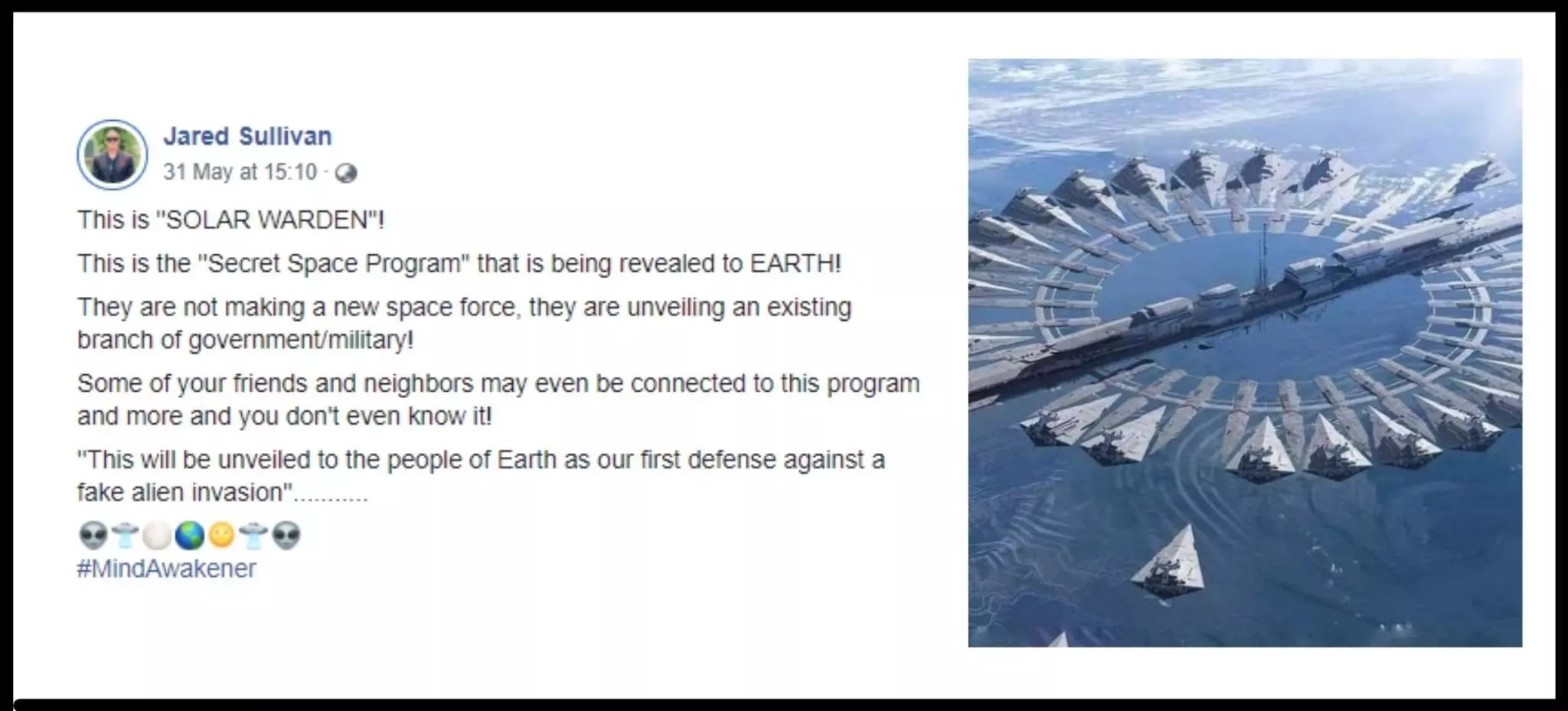
That did not stop Solar Warden believers from declaring victory. A widely shared post overlaid a dramatic spaceship image with text insisting, “This is Solar Warden… They are not making a new Space Force, they are unveiling an existing branch of government/military,” it claimed the fleet would be revealed as humanity’s first line of defense, even against a staged “fake alien invasion.”
Reuters later traced the image not to any classified program, but to concept art from “Rogue One: A Star Wars Story” and concluded the claim was false.
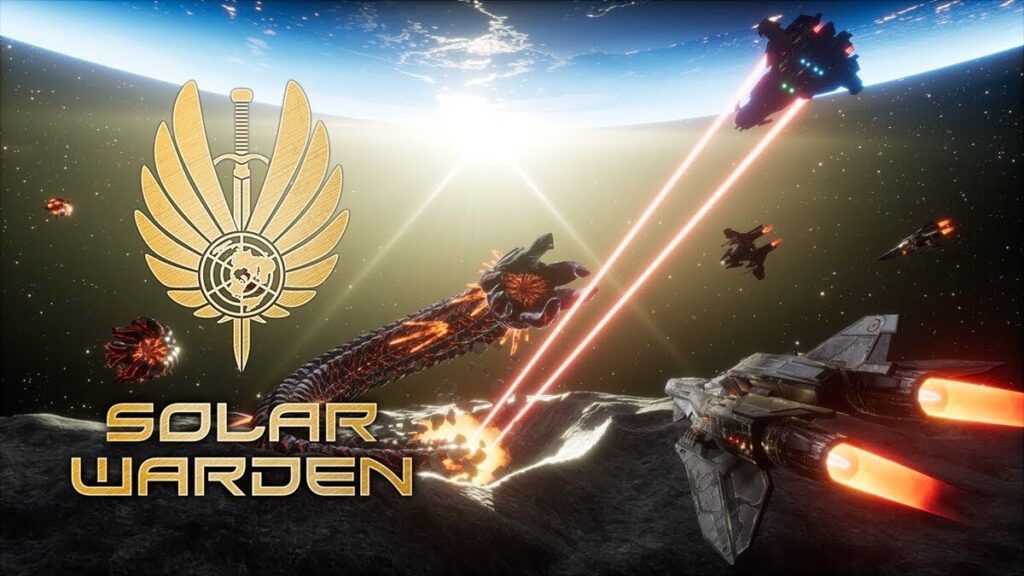
Still, the logic was seductive: if the government just admitted space is a war-fighting domain and is clearly doing classified things up there, why wouldn’t it also be hiding more ambitious capabilities? The existence of real, partially secret programs is the perfect fertilizer for more extravagant rumors.
Evidence for Solar Warden Fails Scrutiny
When you pull back from the hype, the hard evidence for Solar Warden boils down to three things: McKinnon’s testimony about a spreadsheet and an odd spacecraft image, one ambiguous FOIA-related email as presented by Perks, and a whole lot of stories that reference those same points in a loop.
There are no leaked technical drawings, no contract records, no mission logs, and no veterans standing up with service histories that can be checked. Analysts who have dug into the McKinnon case note that “the available record does not support” turning his claims into proof of a functioning orbital fleet; the Solar Warden architecture “existed only in narrative form.”
Even some of the “clues” conspiracists love are easily contextualized. A famous entry from President Ronald Reagan’s diary in 1985 has him musing, after lunch with space scientists, that shuttle capacity was such that “we could orbit 300 people.”
In the Solar Warden mythos, that line is treated as a slip revealing vast, hidden passenger craft. In reality, the shuttle could carry at most eleven people at a time on paper, and in practice, flew with crews of five to eight. Reagan was almost certainly talking about cumulative capacity across a series of flights or a speculative future design, not hinting at a secret armada.
Against that, we can set what we do know Space Force and its predecessors actually operate: constellations of communications and missile-warning satellites, GPS, surveillance spacecraft that monitor other objects in orbit, and test vehicles like the X-37B that stay aloft for hundreds of days doing classified experiments.
That’s powerful, strategically important, and often secretive, but it’s a long way from anti-gravity cruisers dueling aliens in the Kuiper Belt.
So if the evidence is this thin, why does the story keep coming back? Part of the answer is psychological, and part of it is political.
On the psychological side, a secret space navy is an incredibly appealing idea. It reassures believers that humanity is already much more advanced than it looks, that someone competent has the watch, and that the weirdness of UFO reports has a hidden logic behind it. It also turns a solitary hacker’s very real, yet ambiguous, experience into something epic.
As one recent study of the McKinnon affair argues, secrecy creates “interpretive voids,” and in those voids, “mythological constructs arise” to supply closure when official channels offer none. Solar Warden is a textbook example.

On the political side, governments really do hold back a lot. The Pentagon spent years downplaying or ignoring military UFO encounters before releasing an unclassified report in 2021 that basically said: we’ve seen some weird things and can’t explain all of them yet. Intelligence agencies do run black-budget aerospace programs.
Military planners really do frame space as a contested domain with adversaries like China and Russia developing anti-satellite capabilities. In that environment, it’s not crazy for the public to suspect there’s more going on than they’re being told. The leap from “there are classified satellites and spaceplanes” to “there is an eight-ship interplanetary carrier group” is huge, but it scratches the same itch.
The Solar Warden myth tells us far more about Earth than about space. It’s a story about what happens when high technology, genuine secrecy, pop culture science fiction, and declining trust in institutions all collide. The U.S. Space Force is real, very terrestrial in its operations, and busy with unglamorous but critical tasks like keeping satellites alive and warning of missile launches.
Read About Other Military Myths and Legends
If you enjoyed learning The Allegedly Secret Origins of the Space Force, we invite you to read about other military myths and legends on our blog. You will also find military book reviews, veterans’ service reflections, famous military units and more on the TogetherWeServed.com blog. If you are a veteran, find your military buddies, view historic boot camp photos, build a printable military service plaque, and more on TogetherWeServed.com today.
SHARE:




0 Comments