

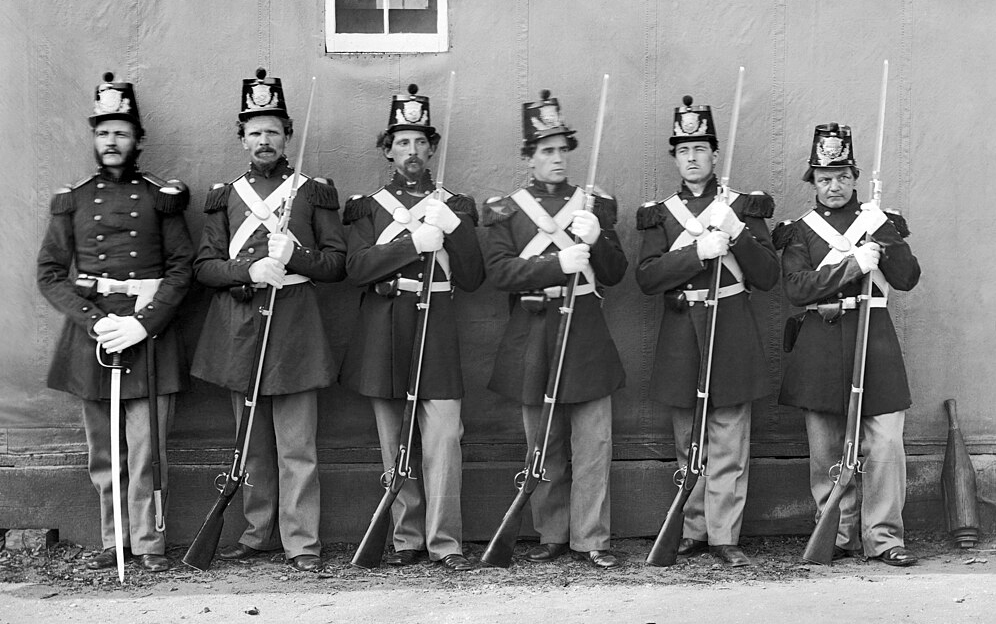
Although it was absolutely critical to the Union’s grand, overarching plan to defeat the Confederate States, we don’t hear much about the U.S. Navy during the Civil War, save for a few critical battles. We tend to hear or see even less about the Marine Corps’ role in preserving the Union. The simple truth is the Marine Corps was just so small (around 3,000 Marines) compared to the Union Army, and as a result, didn’t fight large-formation battles.
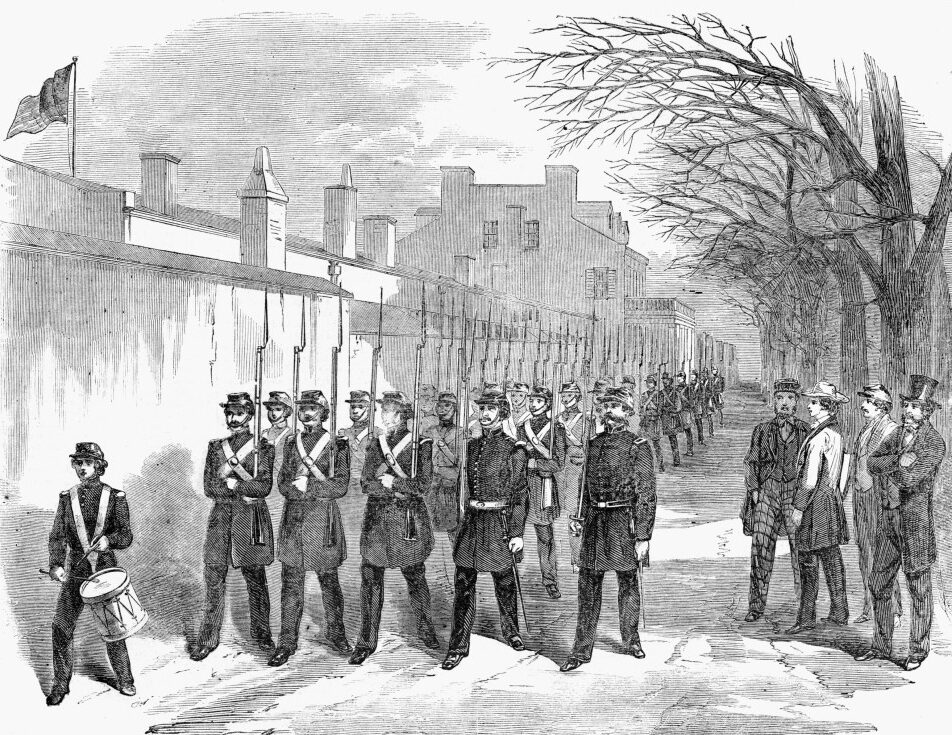
U.S. Marines Showed Value In Union Strategy
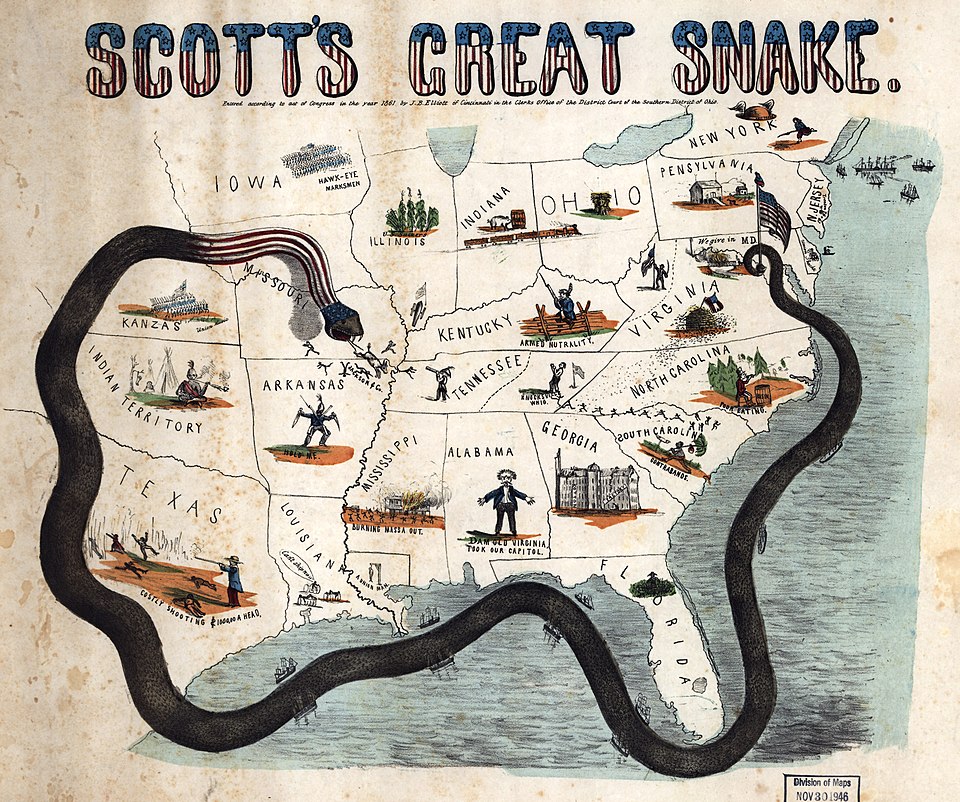
Most importantly, the Corps was struggling to define its role in the U.S. military, but that doesn’t mean Marines did nothing of significance during the war. The Anaconda Plan, the Union strategy that would split the Confederacy in two and control the Mississippi River while strangling its ability to trade, get supplies, and sell valuable cotton in foreign markets, required a considerable naval force. It also needed men with the unique skill set of both a land and sea force. That’s where the Marine Corps came in.
The Anaconda Plan was Union Gen. Winfield Scott’s grand strategy for winning the Civil War by strangling the Confederacy rather than crushing it in one giant battle. The Navy would blockade the entire Southern coastline so the Confederacy couldn’t sell cotton or import weapons, while simultaneously seizing control of the Mississippi River to split the South in two and cut off Texas, Arkansas, and Louisiana from the eastern states.
The idea was that, like an anaconda, the North would slowly squeeze the South’s economy, logistics, and ability to wage war until it collapsed, ideally minimizing massive, bloody land battles. Critics mocked it as too slow and cautious, but in practice, the Union blockade and the capture of the Mississippi ended up being major pillars of how the North actually won the war.
The Civil War is the great age of blue vs. gray armies, not of amphibious expeditionary forces. When the war started, the U.S. Navy was very small, so the Union had to build a large fleet of ships to enforce the blockade, which included river gunboats. It also required cooperation between the Army and Navy to seize and hold the Mississippi River’s key ports like New Orleans, Vicksburg, and Memphis. By January 1865, Fort Fisher in North Carolina was the Confederacy’s last open gate to the outside world.
U.S. Marines Endured Deadly Battles At Fort Fisher
Wedged between the Atlantic Ocean and the Cape Fear River, the fort’s earthworks and guns guarded the approach to Wilmington, North Carolina, which was the final major port still feeding Robert E. Lee’s Army of Northern Virginia. Night after night, sleek blockade runners slipped past Union ships and under the fort’s protection, bringing in rifles, boots, blankets, and food that kept the Confederate war effort from collapsing. Union commanders knew that as long as Fort Fisher stood, the Anaconda Plan had a leak. Taking that coastal strongpoint meant cutting the artery that kept Lee’s army alive.

A December 1864 attempt to capture the fort had failed, but Union forces were ready again by mid-January of the next year. Scattered across Adm. David Dixon Porter’s ships, Marine detachments manned the big naval guns that pounded the fort for days, methodically smashing earthworks, palisades, and artillery. Marines like Orderly Sgt. Isaac Fry and Sgt. Richard Binder on USS Ticonderoga captained guns under brutal conditions, keeping up accurate, sustained fire even when weapons exploded and men were killed around them, work that helped neutralize Confederate batteries and opened the door for a landing. For the final assault on January 15, Porter assembled a “naval brigade” of about 1,600 sailors and 400 Marines to attack the sea face while Maj. Gen. Alfred Terry’s Army hit the land side.
U.S. Marines Risked Lives To Save Comrades
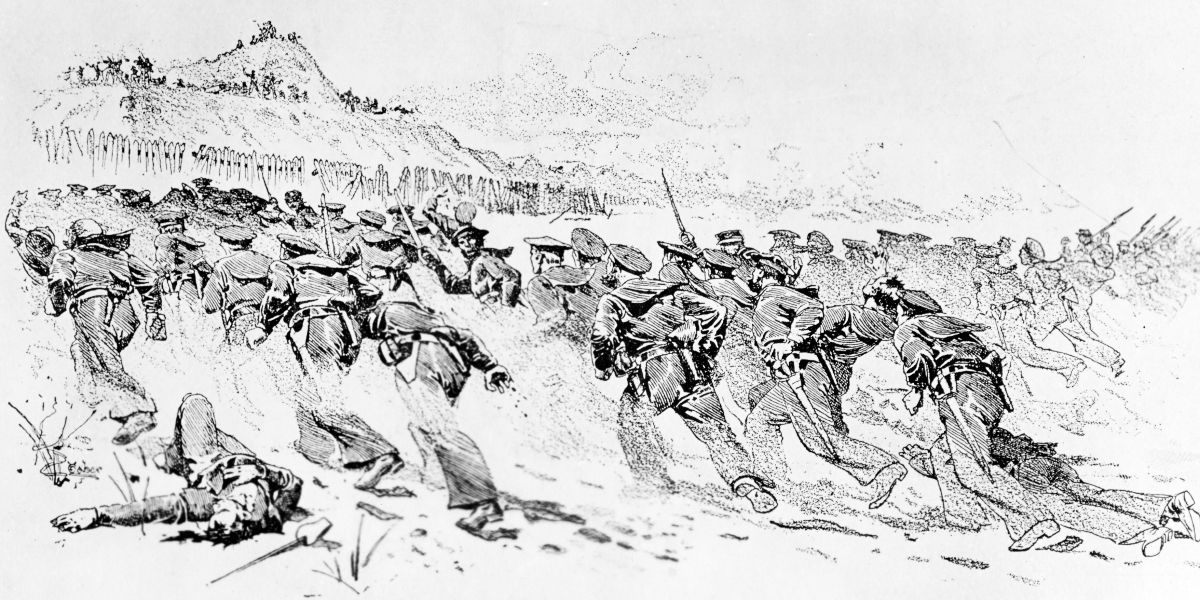
After two days of naval bombardment, the Marines, formed into a battalion under Capt. Lucien Dawson, went in first as skirmishers with rifles and carbines, with columns of cutlass-and-pistol–armed sailors behind them. Crossing open sand toward the Northeast Bastion, they ran into exactly what Confederate Col. William Lamb’s gunners and riflemen had prepared: a wall of cannon fire, grape, and musketry. The brigade bunched up at the fort’s palisade and was torn apart in minutes.
In that chaos, Marines like Pvt. Henry Thompson pushed as far as the breached palisade under murderous fire, while Cpl. Andrew Tomlin dashed into the open to haul wounded comrades to safety, actions that earned Medals of Honor but couldn’t salvage the attack itself.
Tactically, the naval brigade’s assault failed, and the Marines paid heavily for it in killed and wounded. But their attack fixed a large part of the rebel garrison’s attention and firepower on the sea face, giving Terry’s soldiers the distraction they needed to break into the fort along the landward works and fight their way traverse by traverse through the interior.
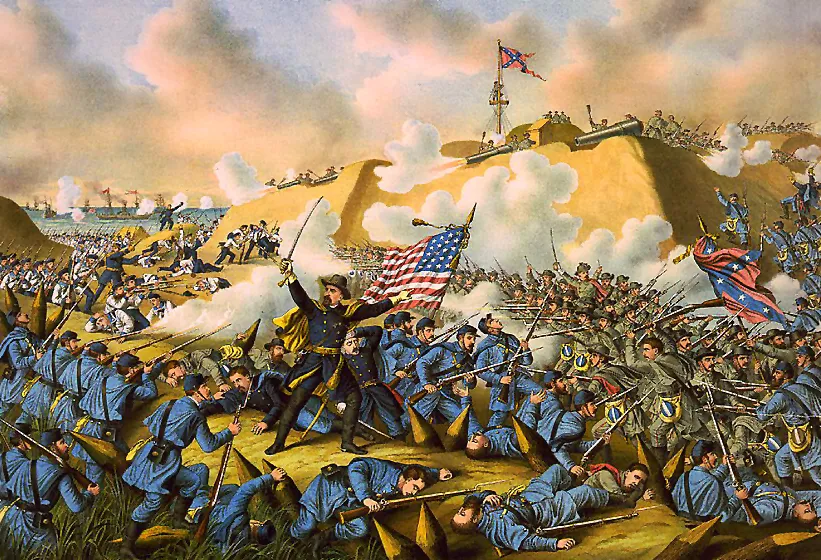
When Fort Fisher finally fell that night, the story of the Marines there was one of disciplined gunnery at sea followed by a brutally costly charge ashore, an operation where their courage and sacrifice under terrible conditions were central to cracking a fortress that had already shrugged off one Union attempt.
Wilmington followed Fort Fisher, and the Confederacy lost its last major seaport and overseas supply line. In the big picture, the Marines at Fort Fisher were doing the same thing they’d done all war: manning the Navy’s guns, then stepping into an infantry role when called on, absorbing a disproportionate share of the risk so the larger Union machine could finally finish the job.
U.S. Marines Demonstrated Discipline And Bravery
The fall of Fort Fisher set off a rapid chain reaction. With the fort silenced, Wilmington fell, and the Confederacy’s last real seaport was gone for good. The blockade suddenly became a nearly solid wall, tightening the economic and logistical noose around the South. The assault on Fort Fisher was the Anaconda Plan in its final act: the Union Navy hammering the defenses from offshore, the Army closing in from the beach, Marines and sailors fighting alongside soldiers in a coordinated amphibious attack that would have been unthinkable at the start of the war.
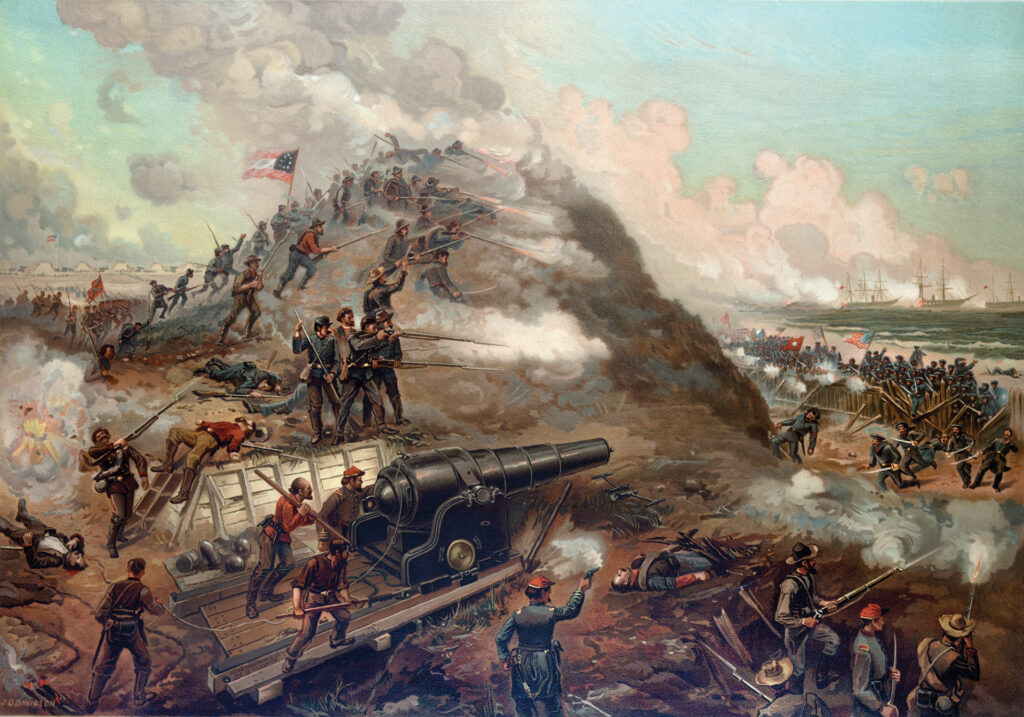
Three months later, Lee surrendered, and the Confederacy was finished. The story of Fort Fisher is the story of how a single fort’s fall helped end a rebellion, not by one dramatic clash in an open field, but by shutting the last door through which the South could hope to breathe.
The Corps may have been invisibly tiny compared to the Army; scattered across ships, built for naval security and small landing parties, saddled with bad leadership, and bled of talent when a chunk of its officers went South. But when called on, the Union Marines did their job well. Some 17 Marines would receive the Medal of Honor during the war, a lot compared with the small size of the force. Marines that later earned glory at Belleau Wood and Iwo Jima were shaped by lessons and reforms that came after this war, in part because the Civil War had shown just how marginal the 1860s version of the Corps really was.
Read About Other Military Stories
If you enjoyed learning about the journey of the United States Marines in the Civil War, we invite you to read the stories of other remarkable soldiers and their heroic deeds on our blog. In addition to our profiles of celebrities who served, we share military book reviews, veterans’ service reflections, famous military units and more on the TogetherWeServed.com blog. If you are a veteran, find your military buddies, view historic boot camp photos, build a printable military service plaque, and more on TogetherWeServed.com today.
SHARE:




0 Comments